7000 POTA QSOs at one park!!!
Today marked a milestone for me. I crossed 7000 QSOs with this activation. This is no small feat for me, you see I normally don’t get more than 30 or 40 calls maximum in the log. Sometimes only 12 or 15 calls is all there is for me as I run QRP power a lot and less than optimal antenna designs.
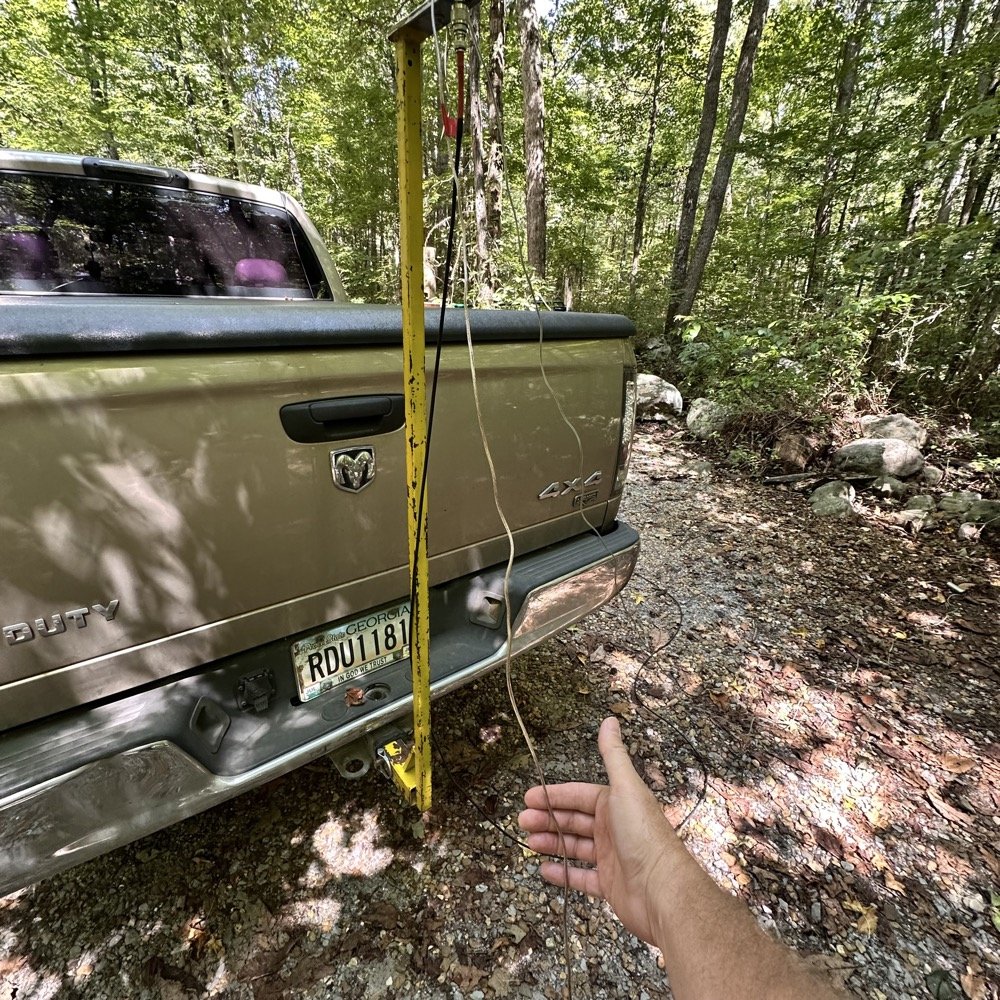
I chose the Sitton’s Gulch parking lot today as it is significantly closer to my QTH than the top of the mountain. The only drawback to this space is that it sits literally at the base of the mountain which is about 75 feet to “camera right” in this photo. Really, it is a little hard to tell, but it goes abruptly UP almost immediately from this area. It is like the mountain just erupts out of the ground here. I do have a decent opening to the NNE around to SSW though so it doesn’t seem to make a huge difference most of the time on 20 meters.
Those buildings in the background are not restrooms, but rather changing rooms for the cavers that come to the park to explore Case cave. This cave is only accessible via a permit from the park so if you come to see this cave, do your homework and call the park first to learn what it takes to gain entrance into the cave.
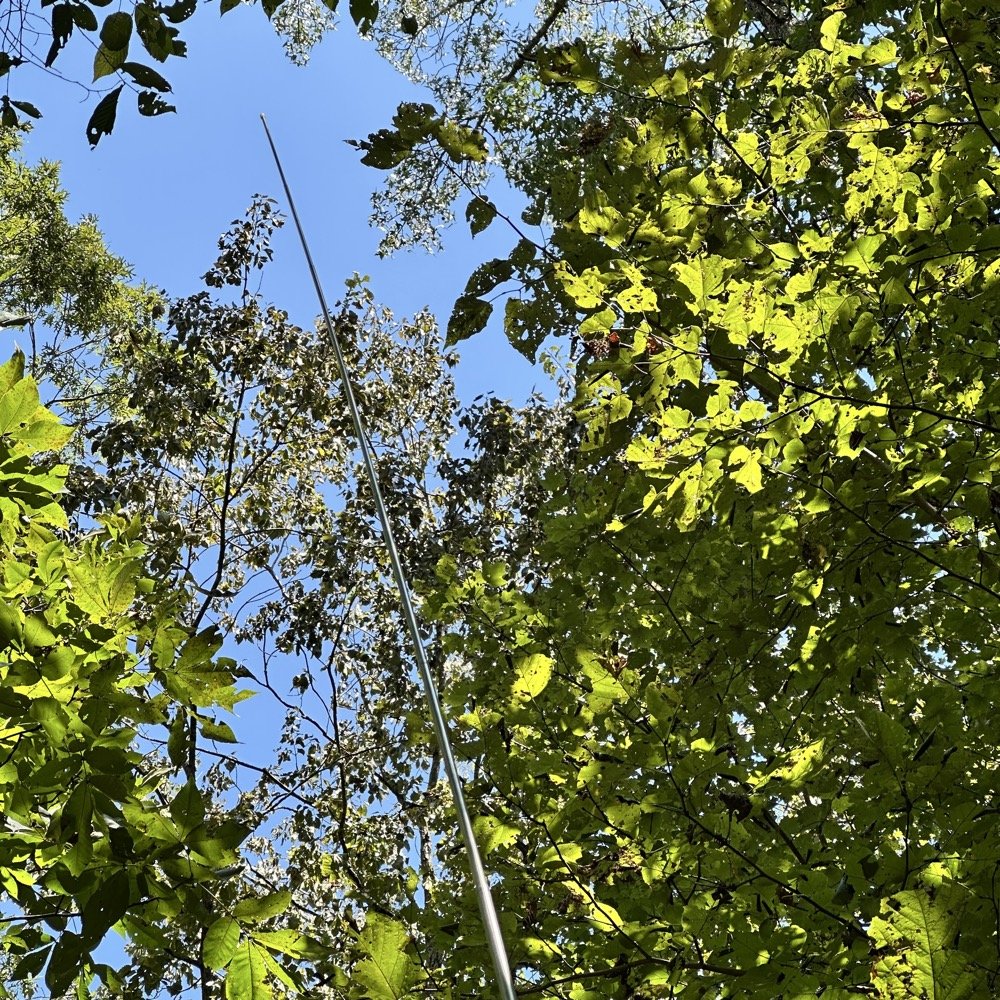
Today saw me once again running the Wolf river Coils telescoping vertical and the two ground radials that I have been using as of late. I knew that I was going to be on 20 meters and possibly 17 meters all day so I didn’t bother with any of the stuff to get on other bands. I had a goal to get to 7000 QSOs so I wanted to be where the hams were… 20 meters…
This antenna system has performed extraordinarily well for me so far and since I knew this, it made choosing which antenna to run a simple thing. I do enjoy experimenting with different antenna designs, but sometimes you just want to get on the air instead, today was one of those days.
I had to move the truck around a little to do it, but I was able to get the antenna deployed for 20 meters without touching a single leaf! This was a feat as the antenna is probably 16’ tall not including the 6’ base it is sitting on. I was really happy with how it worked on the air as you will soon see.
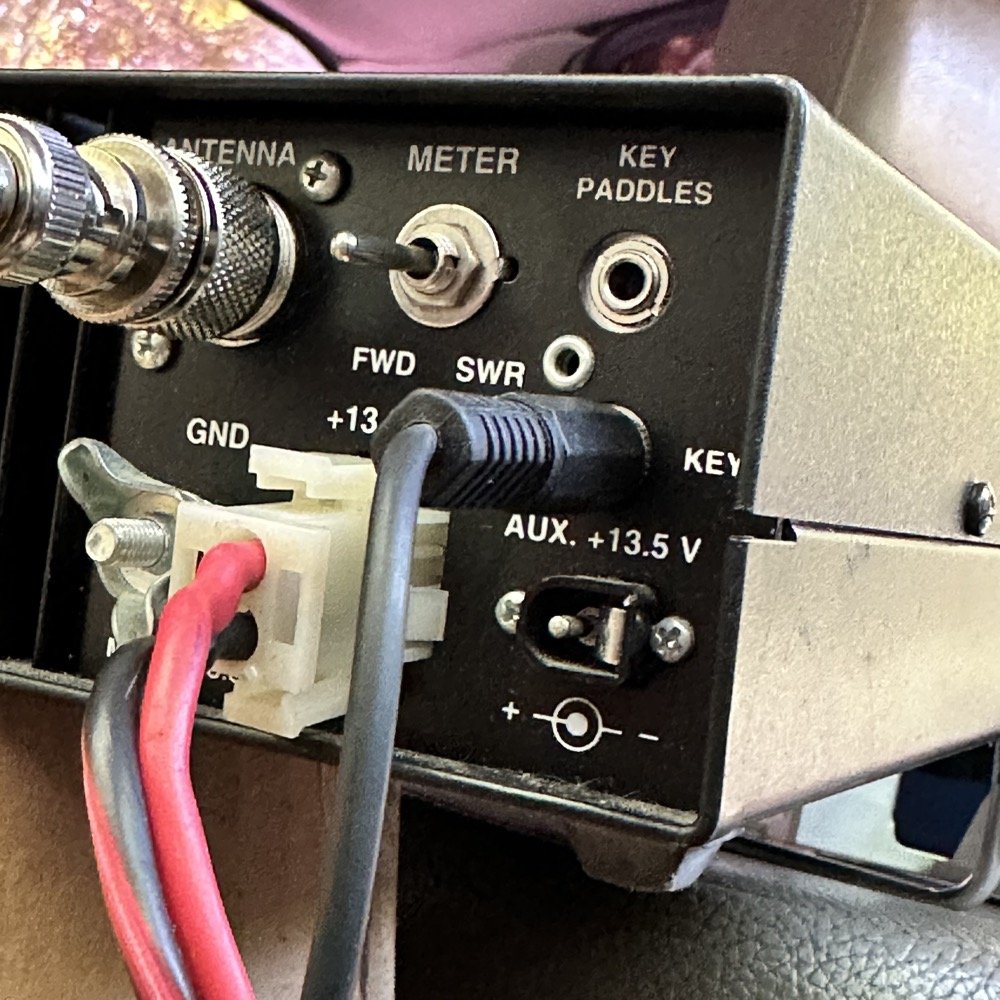
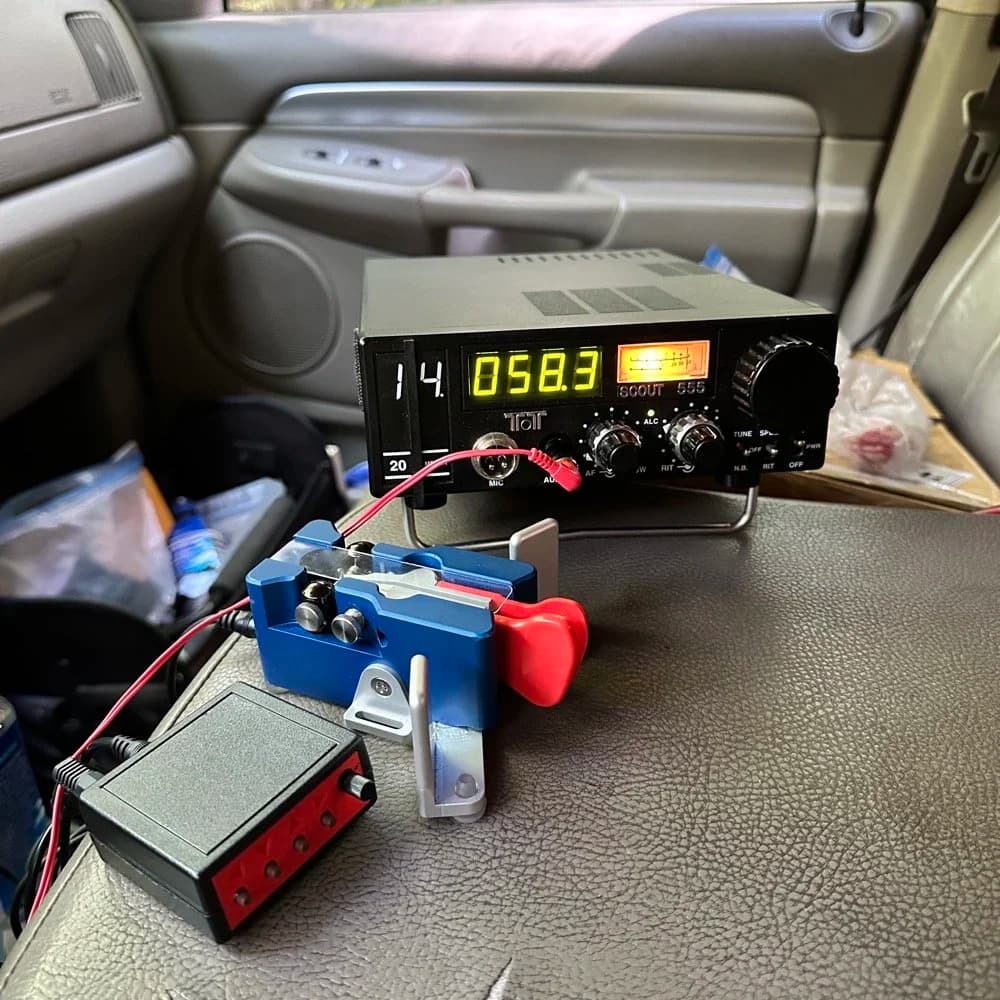
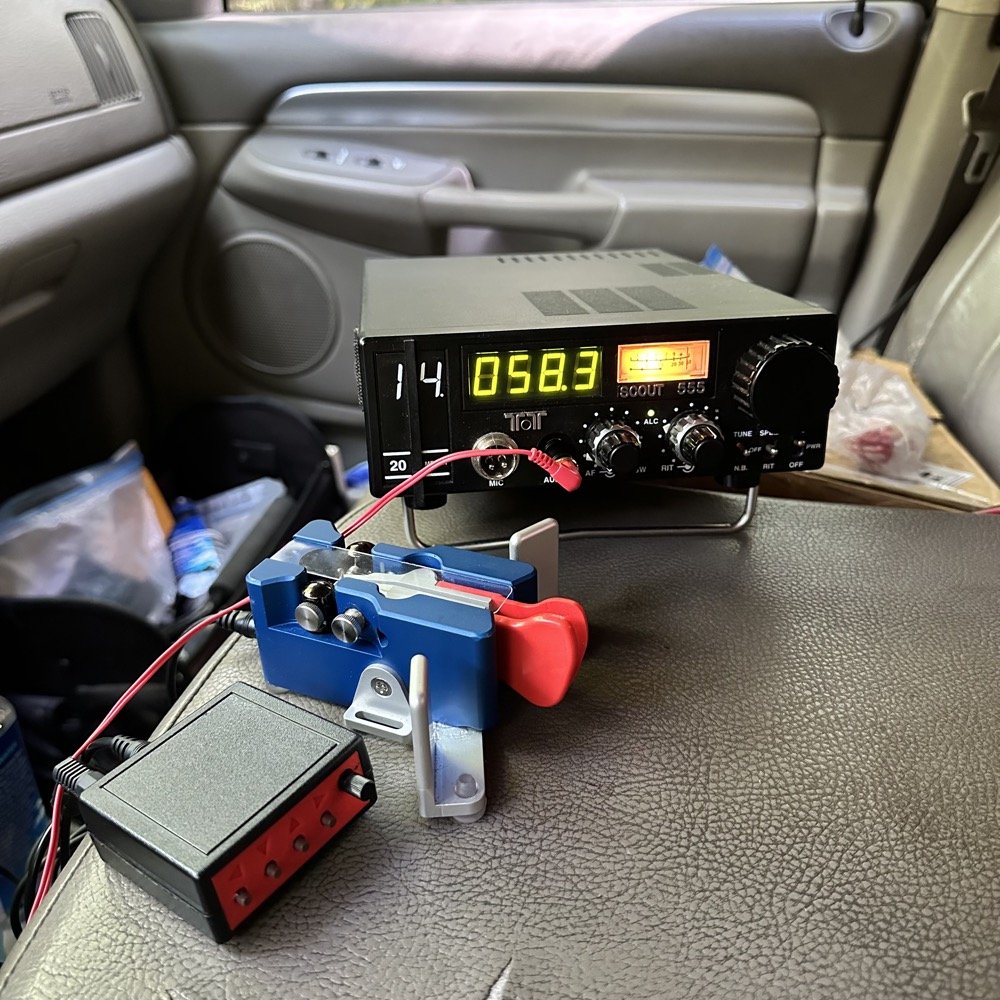
Once the antenna was tuned and ready to get on the air, I ran the coax inside the truck (as I needed the truck power connection to power the radio) and started setting up the radio for the day. As you can see, I am using the Begali Traveler today (this really is a great key) and the Pico keyer and the Ten Tec Scout 555 HF radio. I have tuned this Scout to 40 watts out. The reason for this instead of the advertised 50 watts that Ten Tec publishes is that I want to prolong the life of the transmitter a little longer and this will pull 20% of the load off the output transistors. This reduces heat and current flow and all sorts of other things as well as the noticed difference in received signal is almost impossible to tell from 40 to 50 watts on the other end. I am not sure exactly how much change there is on the received end, but it is way less than one S unit on the meter so I am happy here.
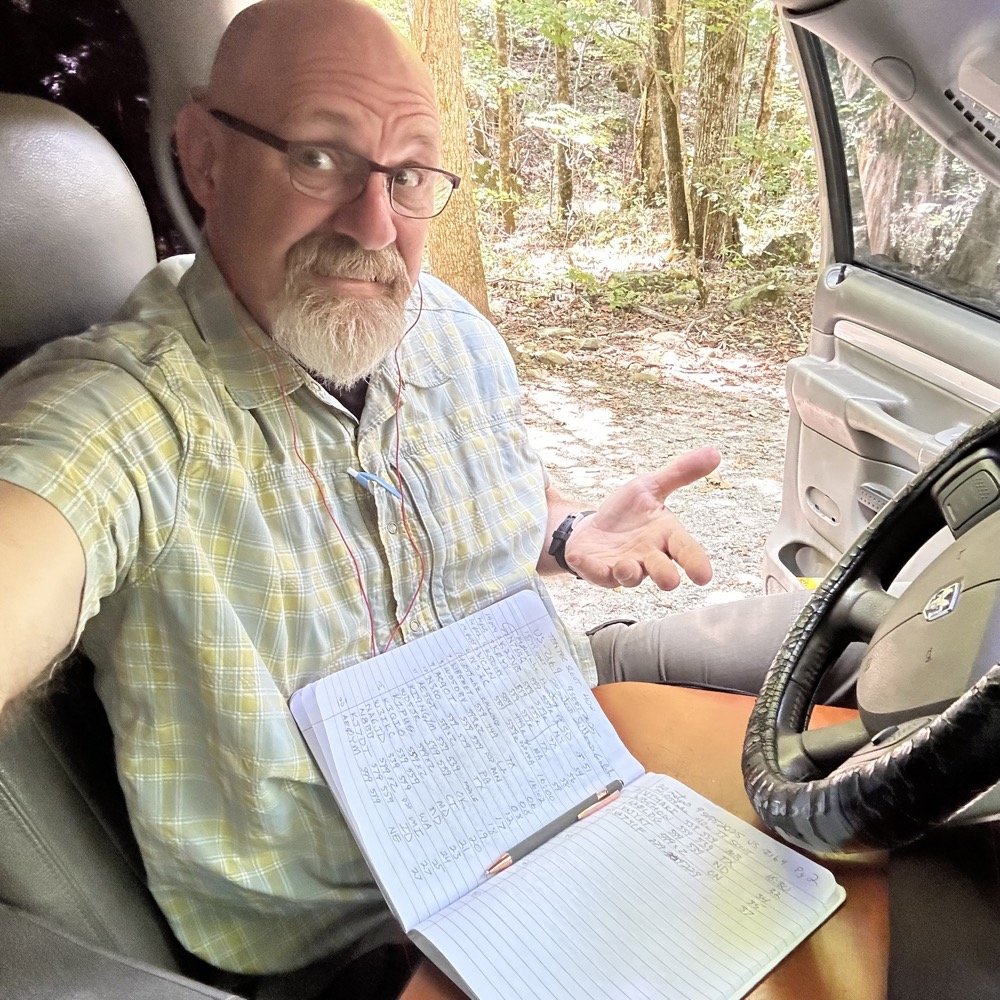
Also noticed the red cord? That is for a set of earbuds… I have learned something about the Scout that should have been obvious to me. The Scout 555 has pretty poor speaker reproduction. If the signal is weak or close to the noise floor, you simply will not hear it with the Scout’s built in speaker… BUT if you simply plug in some earbuds and turn the volume way down to reduce the receiver internal noise as well as the band noise, the signals just soak to the surface and I can hear VERY weak signals right at the noise floor way better! I had no idea (even thought I have used this technique for years in the home shack with great results! I thought the bands were just really bad when I would use the Scout before, but now I see you just need to employ the sound system differently and it will change everything. It literally doubled the number of stations I could hear.
Here is a unique thing about a radio from this period from what I can tell. You have a Paddle input as well as a straight key input. The paddle input runs through a keyer circuit and you can run it from somewhere around 25 or 30 down to something like 2 or 3 words per minute. The only problem is that it doesn’t have a memory so you have to send everything by hand. This is fine if you are having a conversation (rag chew) as all the data is different through out the conversation. POTA is a little different, it has and “exchange” format so you end up sending the same exact information dozens if not hundreds of times in one outing. This is where a memory keyer shines, like the Pico keyer in the photo above, it has 8 memories in two banks and you can record things you send a lot to reduce fatigue on your hand and to buy precious moments if there is a pile up and you are manually logging like I was today…
There is another problem with the built in internal keyer as well that you have to be aware of. The keyer resets upon power down to the stock setting on speed every time you power it off. So you have to reset the word speed every time you power the radio on. This doesn’t seem like a big deal till you forget and send a bunch of trash on your first transmission as the keyer reset to 25WPM and your brain is thinking it will be 20WPM. You have to keep this in mind as you power the radio off a lot sometimes. Every time you change bands, there is a power cycle, so keep this in mind if you plan to use the internal keyer on this radio…or just operate at 25WPM…lol.
You will also notice something else with the Scout that I had never really paid much attention to. The AUX 13.5VDC power port on the radio. This is used to power accessories like keyers and such and this got me to thinking. The Pico keyers are really inexpensive, why not buy another one and program it up for POTA and make a cable for it to power out of the Scout so that I can simply plug the keyer into the Scout and not have to worry about the battery in it going dead on me in the middle of an activation… Seems to make a lot of sense to me to be honest. The keyer only pulls a few milliwatts of energy so the radio can easily handle it, now to get a keyer on order so I can build it out. I could incorporate a socket with a switch that when not plugged into external power, would switch to the battery instead. That makes a lot of sense to me now that I think about it…a lot of sense. New project on the list.
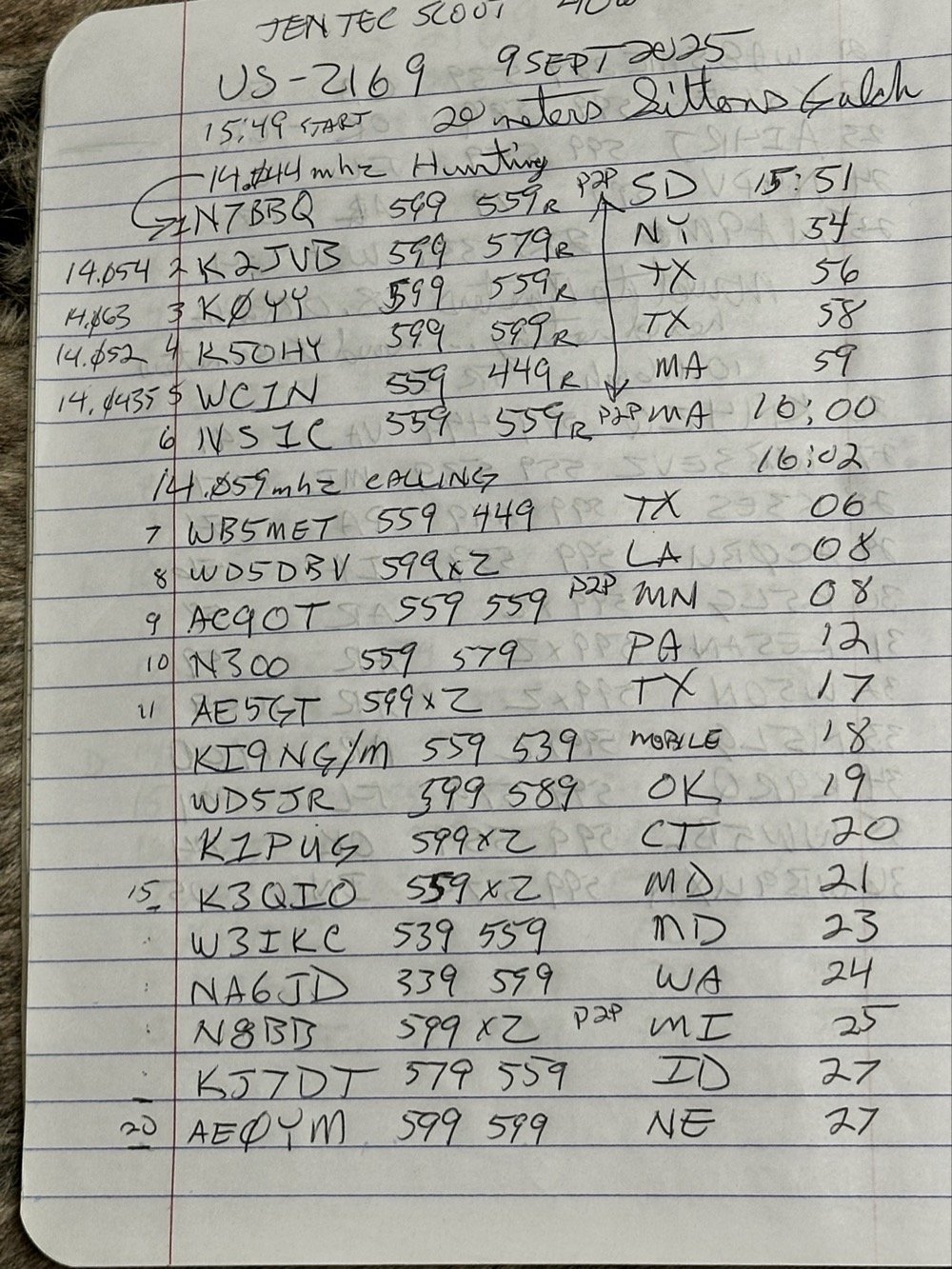
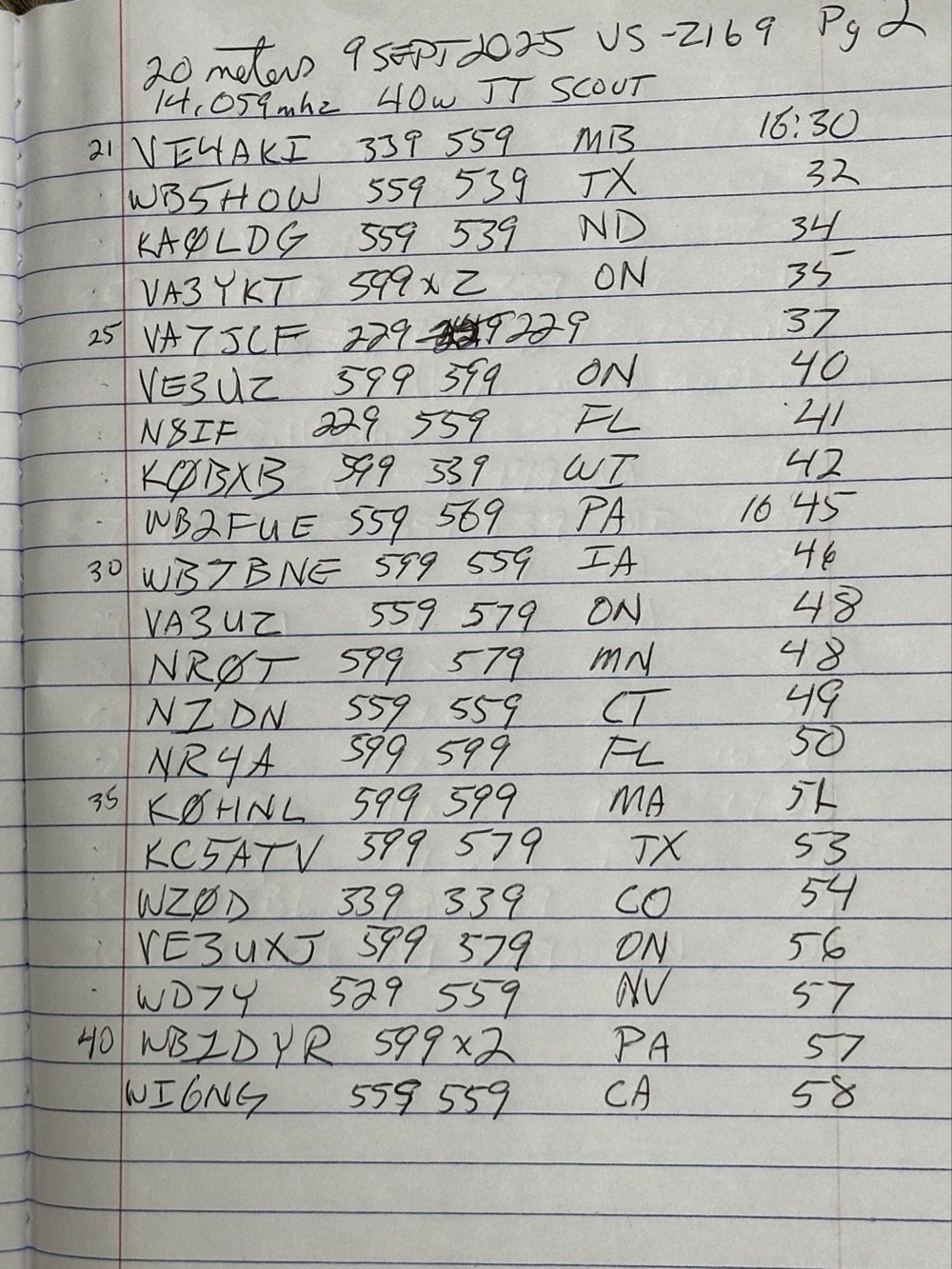
This is the look of a guy who has not figured out yet that the 7000th QSO is already in the log on the first page and he is working to track all the data and write it down and still not have too much dead time between exchanges. If I could do simple math I would have known that N8BB (who happened to also be in a park in Michigan) was my 7000th contact, but for some reason I was thinking I needed something like 40 calls to get there instead of 18… lol. Another thing you will notice is that I am not logging on the little computer I bought for this purpose…I forgot it and didn’t want to drive back home to get it…so it was back to the good ole paper logs again. It adds about an hour later to transcribe the 40 contacts into the computer so I can submit them to the POTA site, but I dont really mind to be honest.

Once setup and on the air, I started out hunting to get a few Park to Parks QSOs in the log and to see what the bands were like at the same time. Turns out that the bands were trash to be honest. A lot of fading on 20 meters, this told me that moving to 17 meters later would be a no go as it is a higher frequency and typically it will have the same problems as 20 meters but magnified. This means the fading on 17 meters would be astonishing and there probably would not be much luck of getting many contacts there at all. Enlightened by this information, I opted to simply stay on 20 meters the whole time.
As you can see in the log above I noted the exact frequencies for each hunted contact, just in case they want a QSL card later, and also the other information that completes the POTA contact. When I paper log, I like to make some notes at the top about the activation so it is easy to remember later what I used and the power levels and such. It isn’t needed but it is nice to look back on for me.
After spending about 10 minutes hunting I looked around and found 14.059 was clear so I set up shop there and started calling CQ. You can see a few things by looking at a physical log like this that is not immediately evident when looking at computer logs. This log tells a story, even though it is skewed as I later figured out. You see, the signal reports I was sending out were higher than they really should have been, you will notice more than once where I send out a 599 and get back something much lower. This is because of those earbuds I mentioned earlier, the signals just seemed stronger than they were due to this little hack I had employed. I also wasn’t looking at the S meter either as it is 35 years old and is probably out of calibration… so it probably isn’t right. I don’t own a 50 micro-volt signal generator so I don’t have the means to adjust it here at the house. On top of that, I was looking mostly at the log book and writing down information and such as that. Once the radio is setup, there is not much reason to be looking at the radio, so I don’t… I had a pretty steady stream of calls coming into me the whole time I was able to be at the park which is nice. I did form a small pile up a couple of times, but for the most part it was just someone tailgating the QSO when we would 73 out from the previous one. This is the perfect cadence for me, I don’t have to struggle to hear calls in the mayhem of a pile up but I am not just banging out CQ POTA all day either. It is actually therapeutic to be honest with you. I highly recommend it.
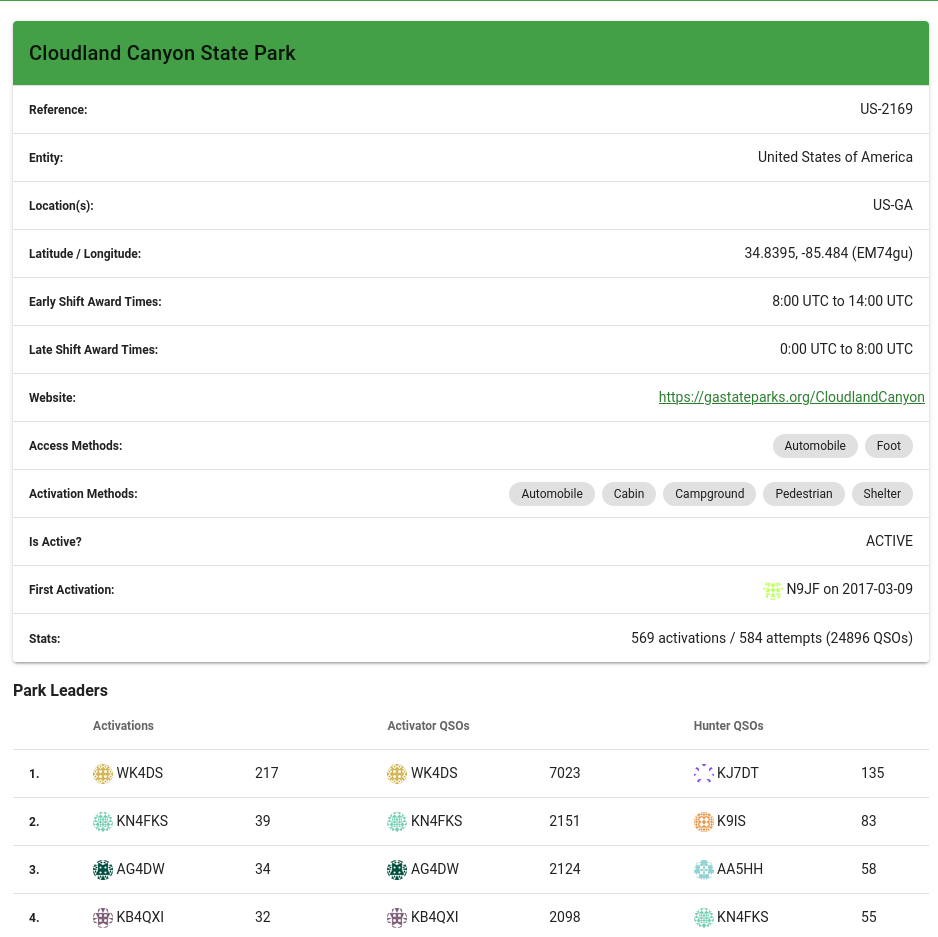
Courtesy of pota.app website
And there it is, 7023 QSOs… as screen captured from the POTA website. I have been to this park 217 times to get that number, it doesn’t seem like it has been that many times to be honest. They go by so fast, I hardly notice. It might have something to do with how much fun it is too…I am not sure at this point but whatever… LOL
73 - WK4DS