Activating a POTA park at the Gulf of America…in the rain.
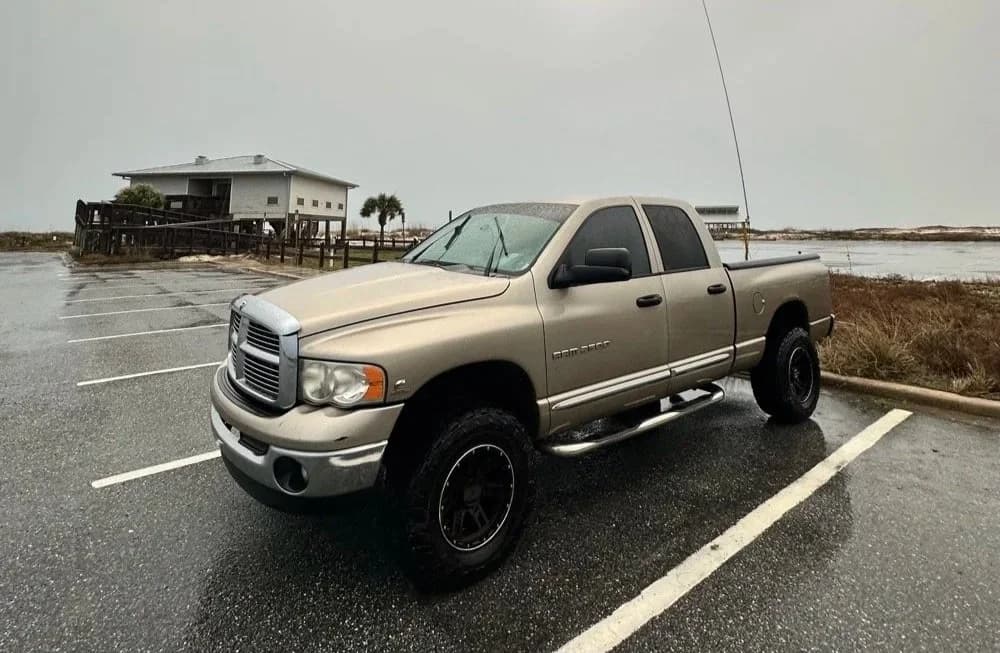
When I goto a new POTA park, I make the best of it!
Today saw me traveling to the Gulf of America! We are heading to central Florida for a little escape from the cold and we stopped in the town of Carabelle for a day. While here, since I brought a couple radios, we decided to goto St George Island State Park for a little fun at the end of the day. Mind you now, I had no idea that rain was moving into the area…
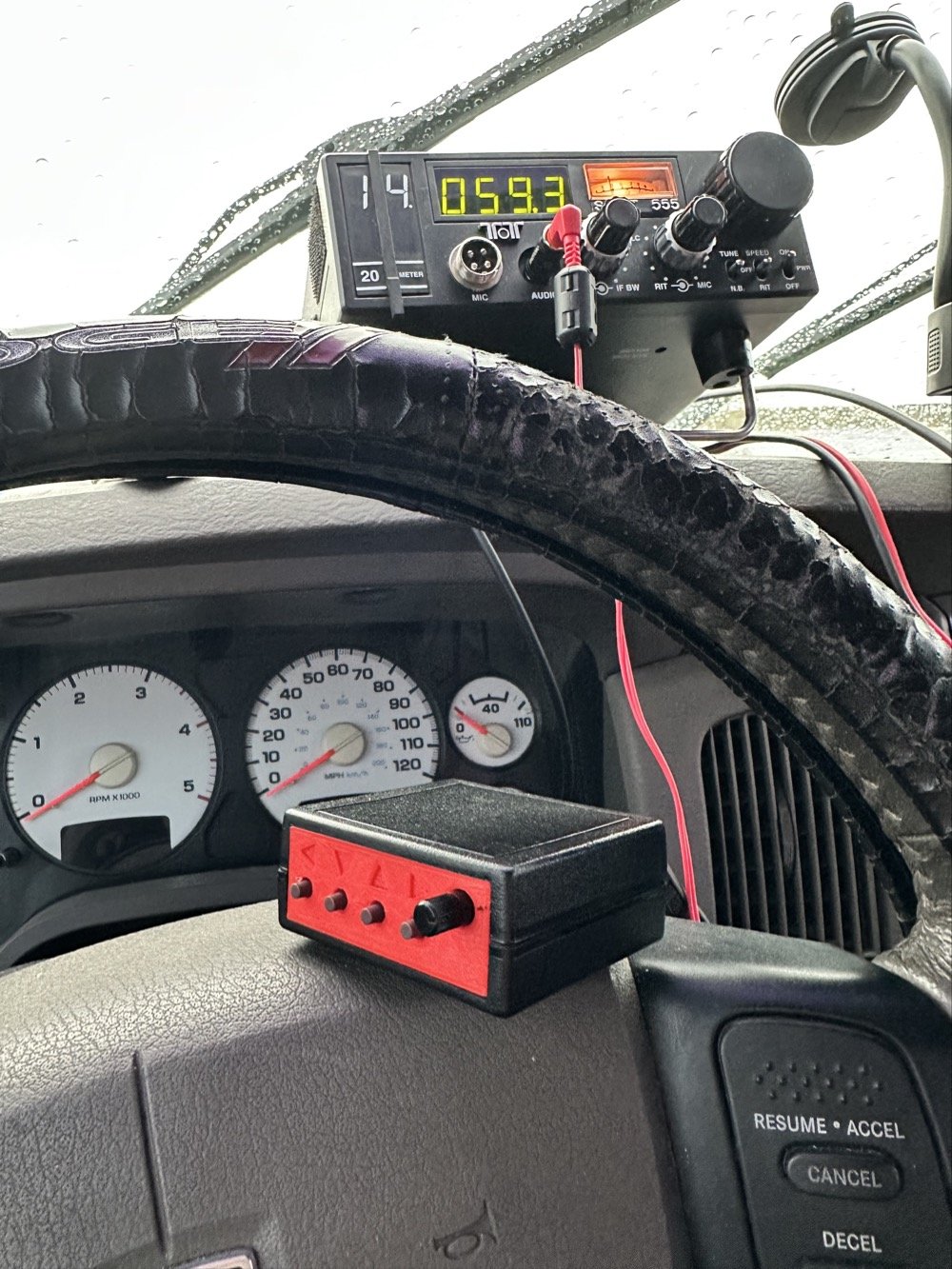
We get to the park and find a ranger station at the entrance collecting a fee to park. 6$ gets you a day pass so once that was done we headed to the far end of the park. It is on a barrier island so the island is only a few hundred yards wide at the widest and just 30 or 40 yards at the narrowest. Contrast that with the fact it is several MILES in length and you get the idea here. We finally get to the parking lot and it is basically devoid of cars… probably because of the rain that was coming now that I think about it.
I proceed to setup on 20 meters for the sole reason that I only had about an hour to activate. This would prove to be unnecessary though as you will see later. I setup the 18' vertical and two radials and run the coax inside the truck to the Ten Tec Scout 555 that I set it on the dash over the steering wheel. This would get it out of the way of my logging computer as well as keep it out of the passenger seat…
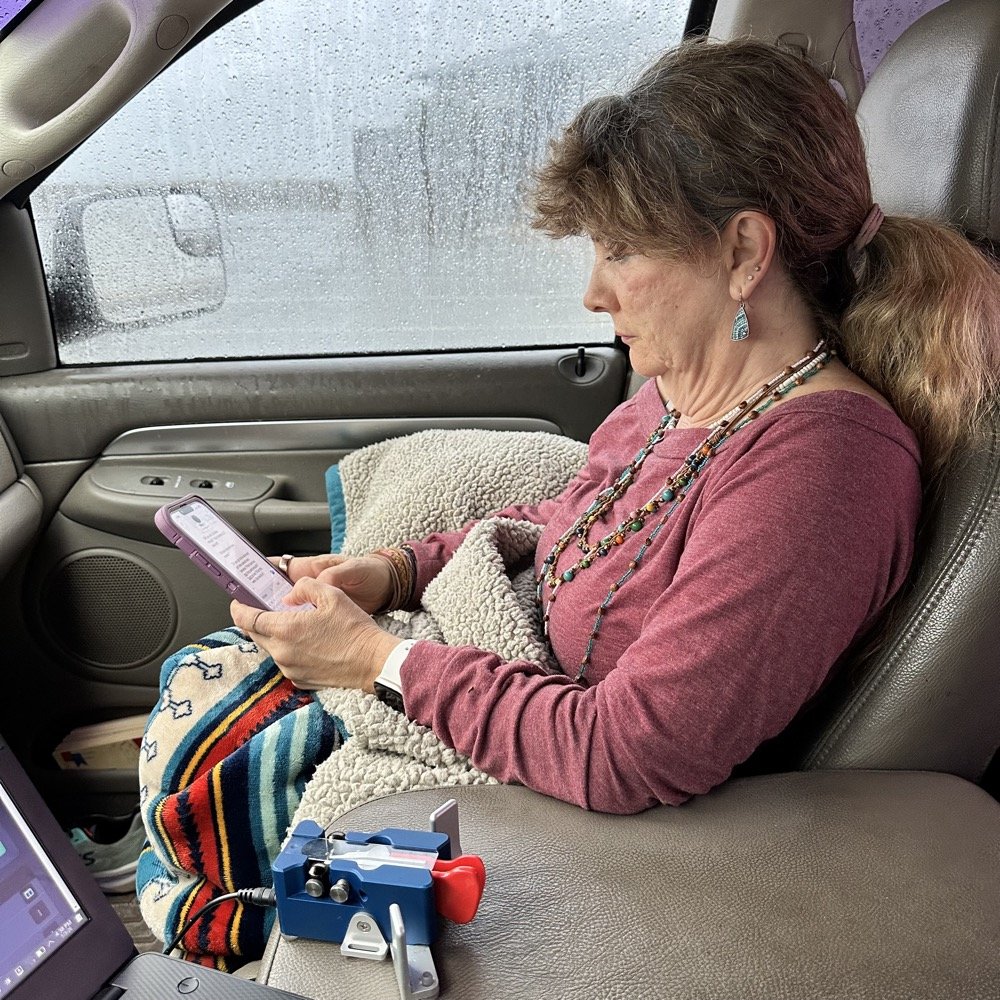
I also got the Begali Traveler key out and used it with the PicoKeyer, but had the whole arrangement located in a new area. Teresa went with me to the park as she had planned to go for a walk on the beach while I activated from the truck. I wanted to make sure I got my ten calls in the log as I would not be here again for probably… never… so I had to make the most of it. Turns out that she doesn't like long walks on the beach if there is heavy rain (and towards the end…lightening!) while she is there. LOL. So she sat in the truck and read a book on her phone while I logged an absolutely incredible amount of calls in one continuous session!
I had checked the space weather and it didn't look great, but I had an ace up my sleeve this time…salt water… Since I was at the beach, I was planning on leveraging this secret weapon to make sure I completed the activation in the hour I had. You notice how I keep referring to "hoping to get my activation completed"? This stems from our trip to Hawaii a few years ago. I almost didn't get my activation when I was in Hawaii, I did get enough in the log at the end, but it took two trips to the park in the same day to get it done. I didn't have that kind of time today. So I was doing everything I could think of to get it to work. Come to think of it, it was raining buckets when I was in Hawaii too… Link to that blog post is here.
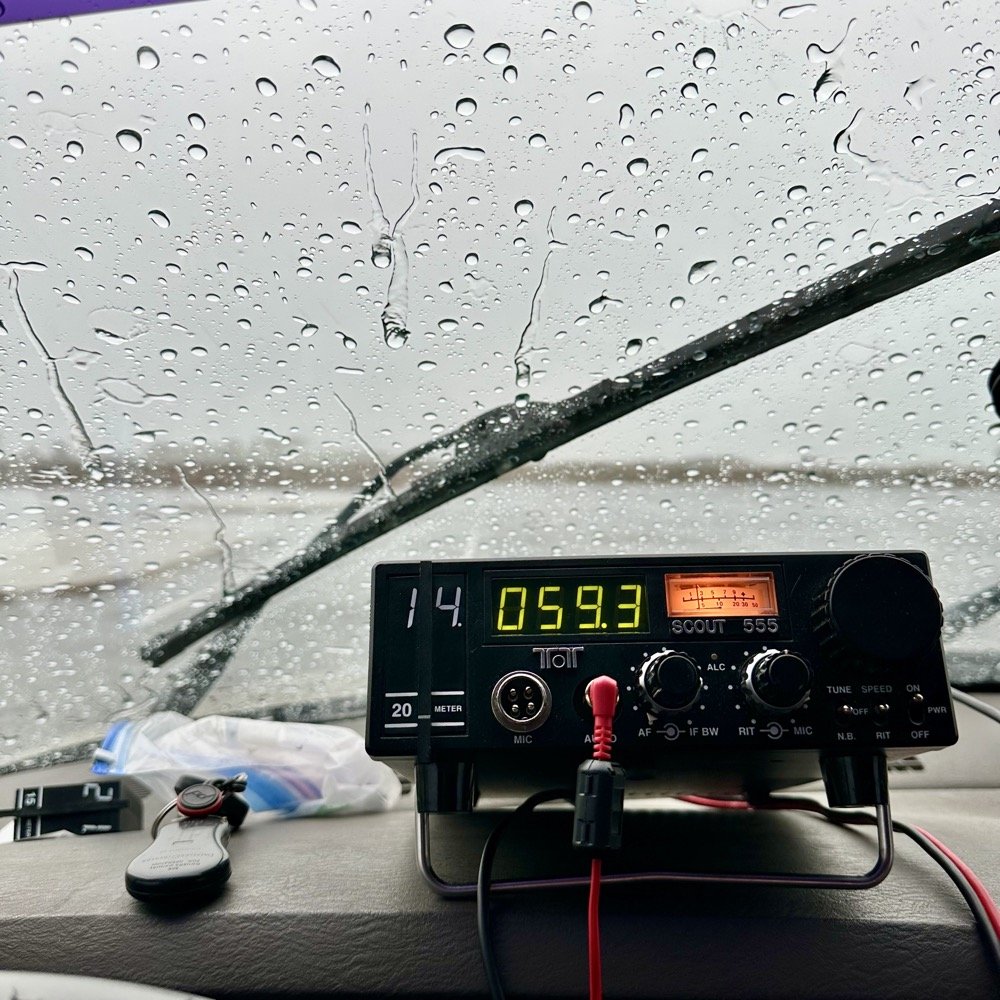
Today's weapon of choice was the trusty Ten Tec Scout 555 again with the 20 meter band module. I also got the 15 meter band module out (I was a little over confident at this point I guess) and laid it on the dash to change over once 20 meters was done. I never was afforded the time to use this band module though as the calls just kept coming on 20 meters! I also was not too keen on getting out in the rain and re-tuning the antenna to be able to change bands either.
I really love these little radios for CW in a POTA environment, the receiver works incredibly well for such a simple radio. If you will use some earbud style headphones with it and turn the volume down to almost nothing, the weak signals will just soak to the surface and can be worked fairly effortlessly. This is an old CW trick I learned 20 years ago that still works even today. It even works on the new SDR based radios. I use this technique anytime there is a lot of static noise on the bands or I hear weak signals near the noise floor.
It was a ton of fun to be on the other end of a pile up again, and this happened a few times on this day. Most of the time I would get two or maybe three calls at once, but usually one of them would be off frequency a few hertz and this made them stand out from the ones who zero beat my signal perfectly. You see, the ones who zero beat my signal are technically working me correctly, but I find it really hard to dig one station out of the plurality of station calling all on the same frequency. Their side tones all blend together and make one huge sound that is undecipherable. Due to this, I end up asking for a letter usually that I have heard at the start as one call usually gets in before the rest.Ah, so is the life of a CW op at a POTA park.
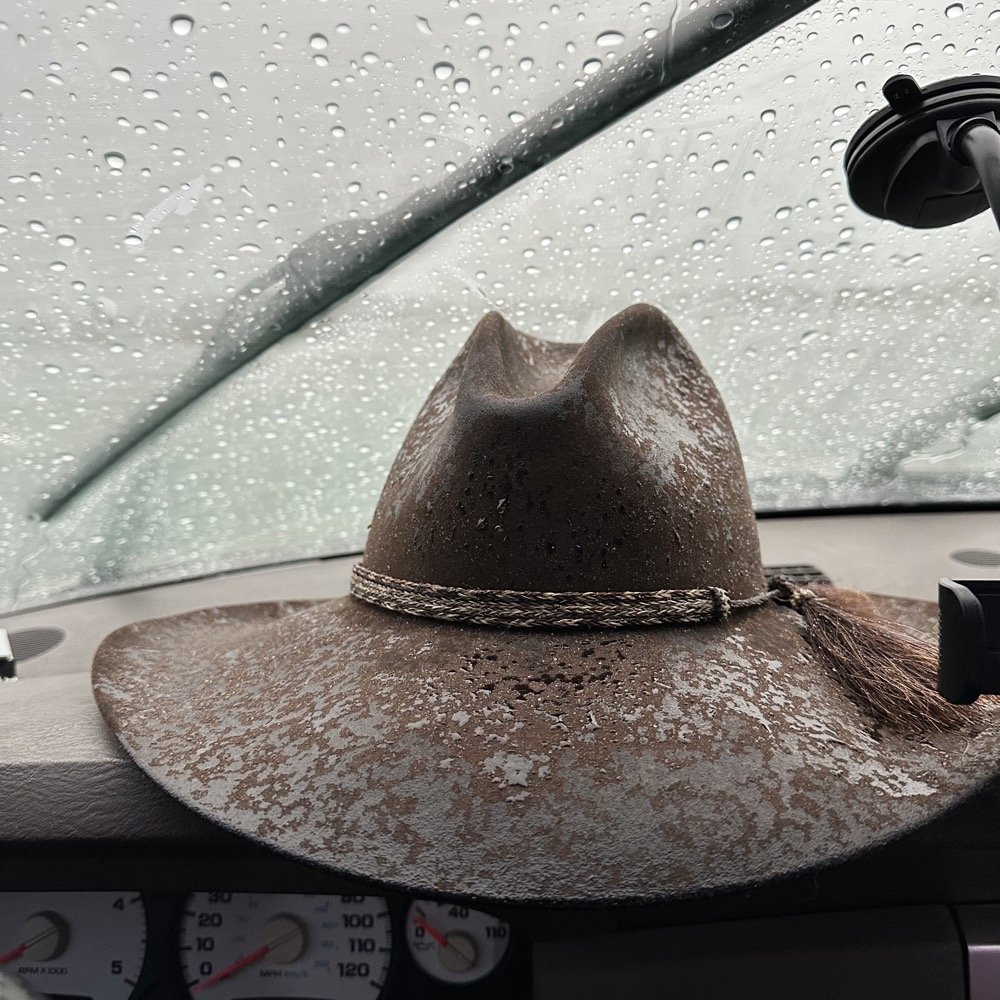
Did I mention it was really coming down while I was activating. Here is what my hat looked like after getting out to grab a couple of photos right quick during one of the lighter points in the deluge.
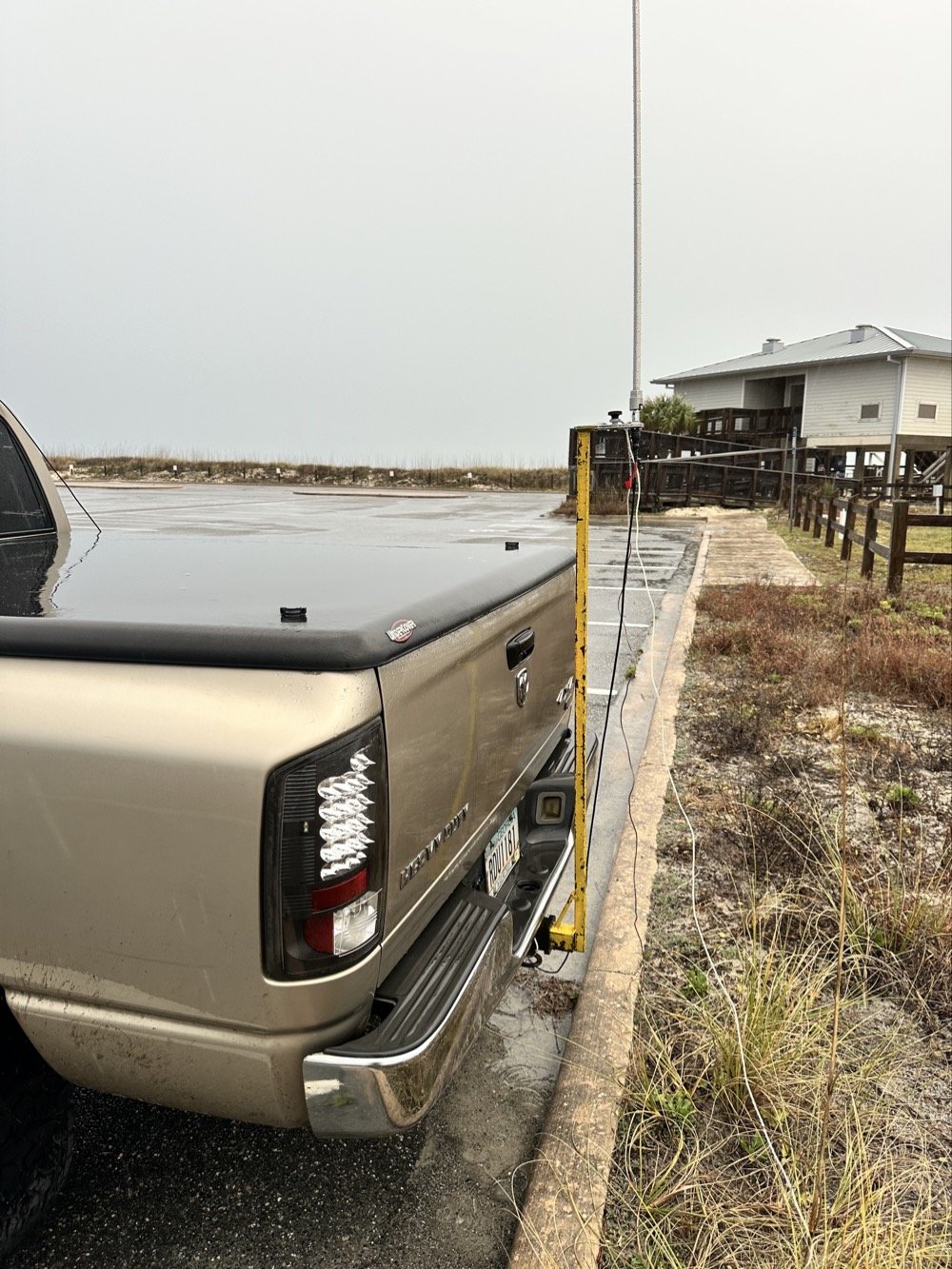
It is hard to tell in the photo below, but it is coming down pretty good. This is the good thing about operating out of the truck. I can run the coax into the truck cab and set the radio up in there and still get my activation in regardless. If I were setting up on a table or some such, it would be much more challenging to say the least. It is doable like that unless there is no way to hang the antenna, like you see in this photo. Without a free standing antenna like the one on my truck there would be almost no way to work many of the stations I logged on this day. I would be literally laying the wire antenna along the ground beside the parking lot or something like tying it to the uppermost hand rail in the photo and running it back down to the ground in the parking lot, no matter what, you get the idea. It would be much more difficult if not almost impossible.
Turns out, a little over an hour and NINETY SIX calls in the log later, all those fears would melt away. Yeah, 96 QSOs and more were calling but I was out of time. (I REALLY wanted that 100th QSO but there just wasn’t time) The park was about to close and the rain had slacked up a little allowing me to roll up the antenna and coax and get the truck mobile so we could get out before they locked the gate. With all that info in hand I called QRT and shut off the radio so I could pack everything up…somewhat… as I also wanted to dry out some of the hardware before storing it. Even if it didn’t get rain directly on it, there was still a metric ton of humidity to deal with. Fortunately, the radio was still warm so I am hopeful that there was no corrosion issue coming from this trip. I logged it as 30 watts, but without a good wattmeter, I am unsure of the exact wattage. At home, on a dummy load, with a strong 13.8 volt power supply, it was putting out a solid 40 watts. I turned it down 20% to pull some load off of the 50 watt amplifier module in the hopes it will last a little longer before it dies and I have to redesign it. All in all it was a great day at the park!
Until next time,
73