I went out west and took the Penntek TR-35 CW QRP radio…
So this is how things went…
I got the opportunity to activate a couple of parks while on a trip to Arizona so what did I take with me? Well, that is a simple answer to be honest, I take a small, CW only QRP rig. I have one that is perfect for this job too. The Penntek TR-35 is a really small radio that is similar to my old K1 from Elecraft, sans the antenna tuner module. It has similar output power and the same bands that the old K1 had. It even has two memories for sending automated messages like the K1.
I packed this little radio into a travel kit and added it to me stuff. I have strict rules about what I fly with now. Ever since a trip to the UK a few years ago, I have learned how to travel really light. So light in fact, that I don’t have to check a bag at all. I can walk onto the plane with everything I want to take and it fits in the overheard (and under the seat, but the smaller bag really isn’t critical to be honest.) I now travel with a Mystery Ranch backpack and it is super comfortable and will carry everything I want to take and then some. I literally have room for knick-knacks if wanted to pick something up and bring it home.
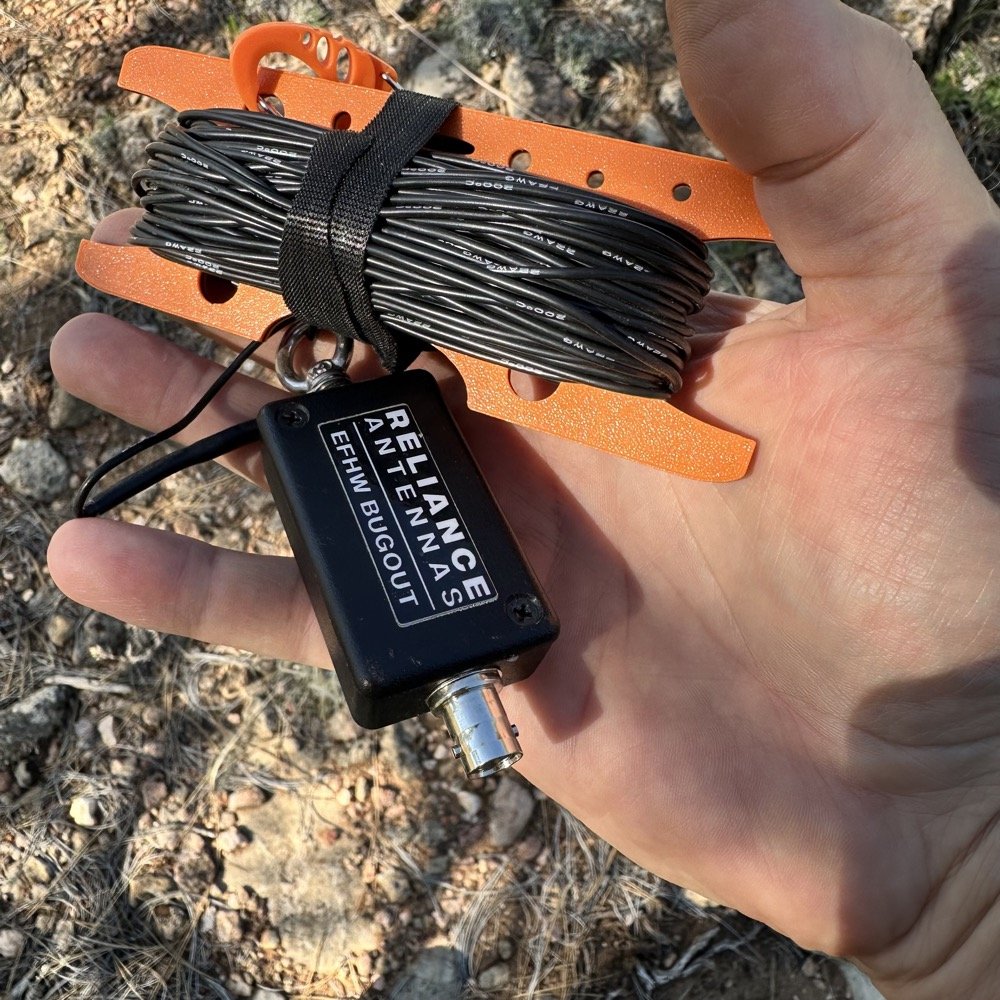
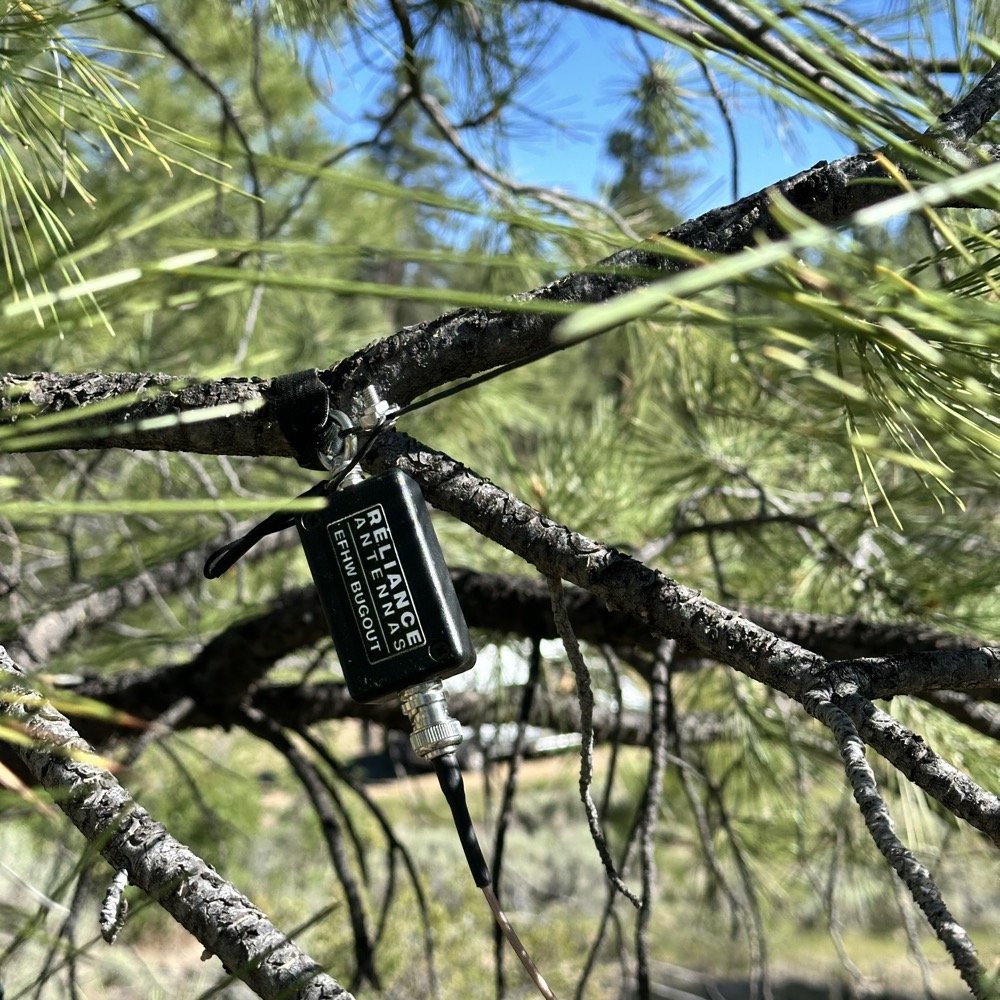
What I didn’t count on was the diligence of the TSA in flagging my ANTENNA as dangerous and needing further scrutiny EVERY TIME I WENT THROUGH THE CHECKPOINT… That antenna must look really scary to that scanner thingy as it did kick my pack out for inspect on both trips… I will plan ahead next time and make sure the antenna and coax are separated in the pack. I am pretty sure it has to do with the density of the cabling as they spread the stuff out in a bin and it passed inspection just fine. Crisis averted… as without that resonant antenna, I would be dead in the water… Below is the scary antenna that kept getting me “special” treatment at the airport… (It is a great antenna by the way)
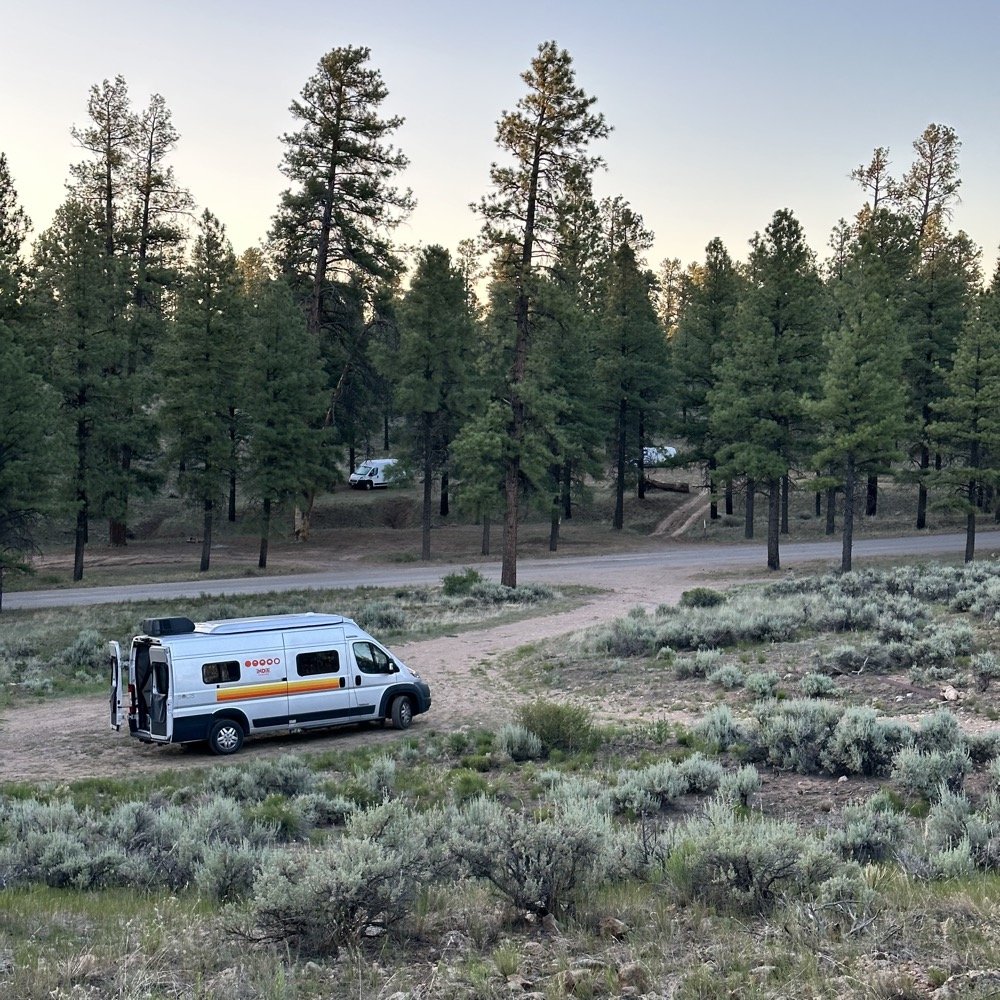
Once on the ground in Arizona, we spent a few days with some friends in the Phoenix area and then rented a camper van and headed north. The van is cool as we could stay on the BLM land without having to pay for a campsite and it was also in POTA parks too. This allowed me to setup and make contacts right by the van. How awesome is that???
Once we got the location picked out for the night in the Kaibab National Forest (US-4430) just south of the Grand Canyon, I proceeded to find a tree that would allow me to hang my 40m EFHW from Reliance Antennas. I found that I needed more throw line as I first landed on a branch so high that I didn’t have enough rope to get the wire up as both ends would not reach the ground… I could have tied the end to the wire and hoped for the best when I threw the line, but I don’t like having to use the antenna wire to haul the throw line around at all if possible. This didn’t seem to matter though as I had great results from the lower limb anyway.
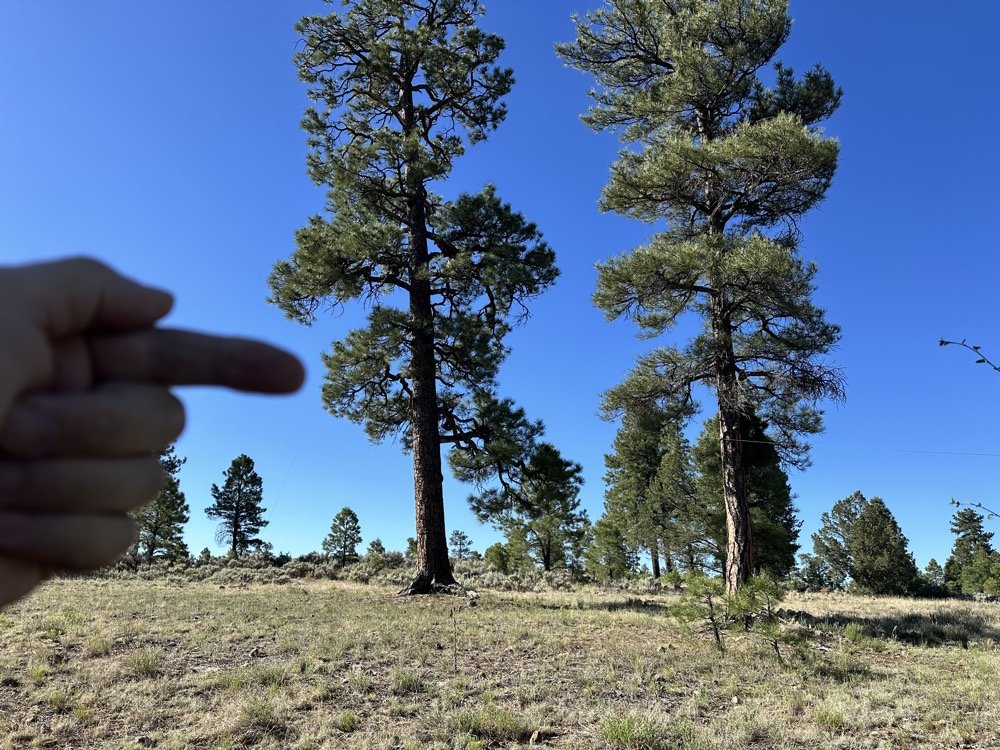
Below shows me pointing to where I was able to get the end of the wire up into the tree. I had thrown the line almost twice that high to start with… It was a solid 18 feet high, maybe a little more. Then I brought the other end of the antenna over to a cedar bush and tied the transformer into the bush with the velcro strap used to secure the antenna wire for storage (can we say pulling double duty?) As seen below, you can see the the whole of the antenna is 5 feet above grade and higher.
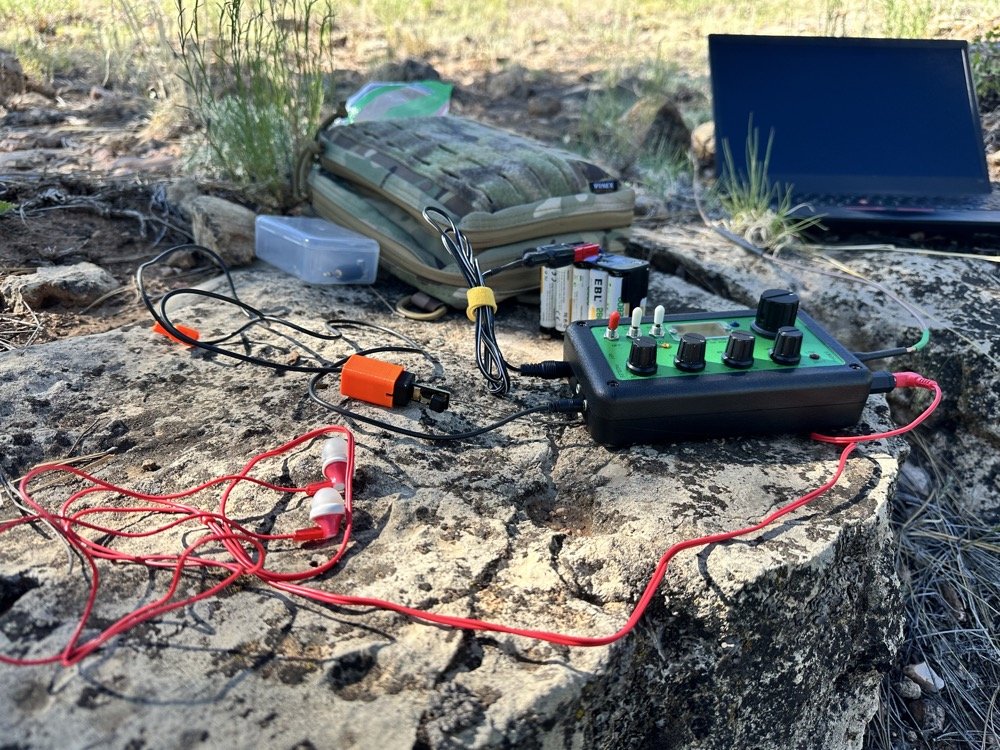
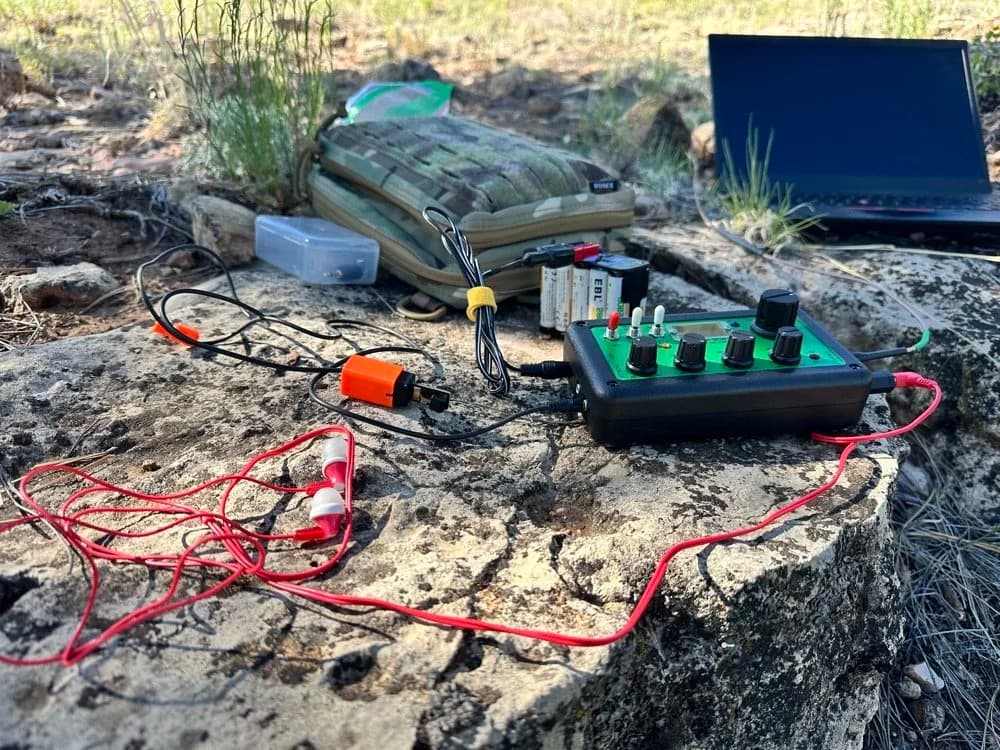
The coax of choice is ABR Industries with the ferrite common mode choke built into it. This allowed me to use the coax shield as the counter poise and keep the common mode currents out of the radio at the same time. Making my items usefulness in more than one way was the plan from the outset. ABR Industries makes some wonderful products and I am glad I found them for this project in particular. Once the antenna was strung up, I set up the station on a nearby rock that would allow the coax to be laid out as straight as possible as well as giving me somewhere to setup the gear. This kit has the N6ARA tiny travel key in it, which works way better than it should to be honest. It also has some decent Sony headphones as the TR-35 has no speaker at all. The power is provided via 10 AA rechargeable batteries as this makes the whole system end up at about 13.5 volts when the batteries are fully charged. (This was the measured voltage of the charged pack so these 1.2 volt cells will charge to 1.35 volts each…give or take a little…) I also took a USB battery charger as well so I could recharge the batteries overnight while we slept and drove around. In fact, all my gear on this trip was USB charged, camera batteries, video camera batteries, and the ham radio batteries as well.
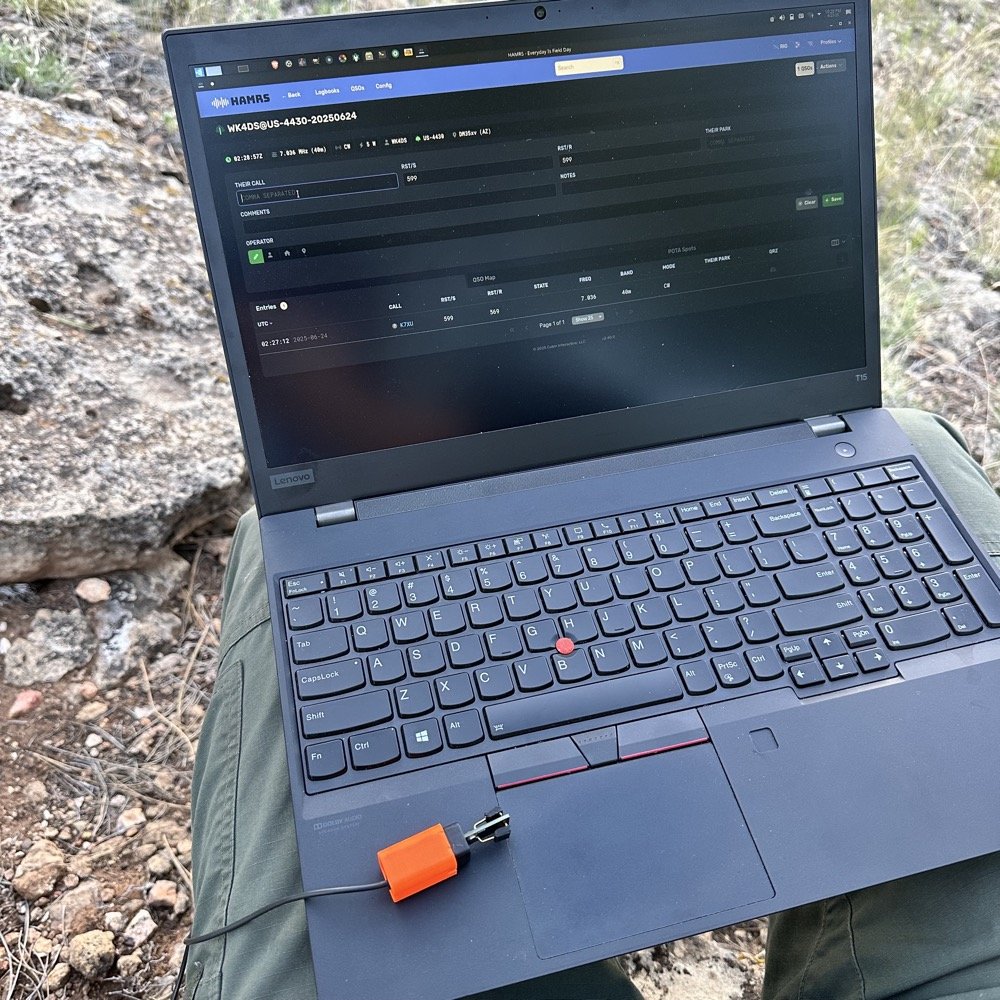
This is what the station looked like once it was all set up. I love these kinds of minimalist setups, it is so satisfying when you can make enough contacts on a rig like this to secure the activation…so satisfying. If you will look at the sprig of grass next to the computer, you can see the common mode choke in the coax as well. I did take my logging computer as I also used it to edit and catalog the photos and video from the trip while I was out there. Since it has the program on it, why not use it to log? It would turn out that I didn’t have time to recharge the computer between campsites so I couldn’t log with it on the second day, but I still had a solution… I got on the air towards the end of the day and decided to start on 40 meters since the sun was starting to set and I knew i would be dark back east, hoping this would give me some grey line propagation back into places like Texas and such…and it worked! I was able to work 11 contacts on 40 meters before venturing to 20 meters to see what I could do there as well! I had locked in the activation and had not even ventured off of 40 meters, I was stoked! So I worked a good many contacts here as well before turning in for the night. Oh, and another thing, I waited late enough in the day that it flipped the UTC day to the next day. This meant that in the morning, I could hop back on the air and see if I could work a few more before we left. I left the antenna in the tree and the coax connected in the hopes that nothing would happen to it over night (which it didn’t) and was able to plug back in the next morning and work several more before shutting down with 31 calls in the log, one of which was Mexico!
You will notice below as well that I am still using HAMRS, it works really well for me since I solo operate and never do multiple parks or twofers and such so I don’t have any complaints about this program. Some feel that other logging programs work better but I have had zero problems out of HAMRS so that is what I use. On Linux, it is a little clunky to setup, Aaron had to show me how to run it in the command line, but now that I know what to tell the computer, it just starts right up without issue. You can also see the N6AA tiny key as well that I was using, like I said, this little key punch way above it’s weight class. Once adjusted, it is a dream to use. I would recommend getting the larger shell if you have big hands though as it is kinda hard to hold for me during long sessions…just an observation.
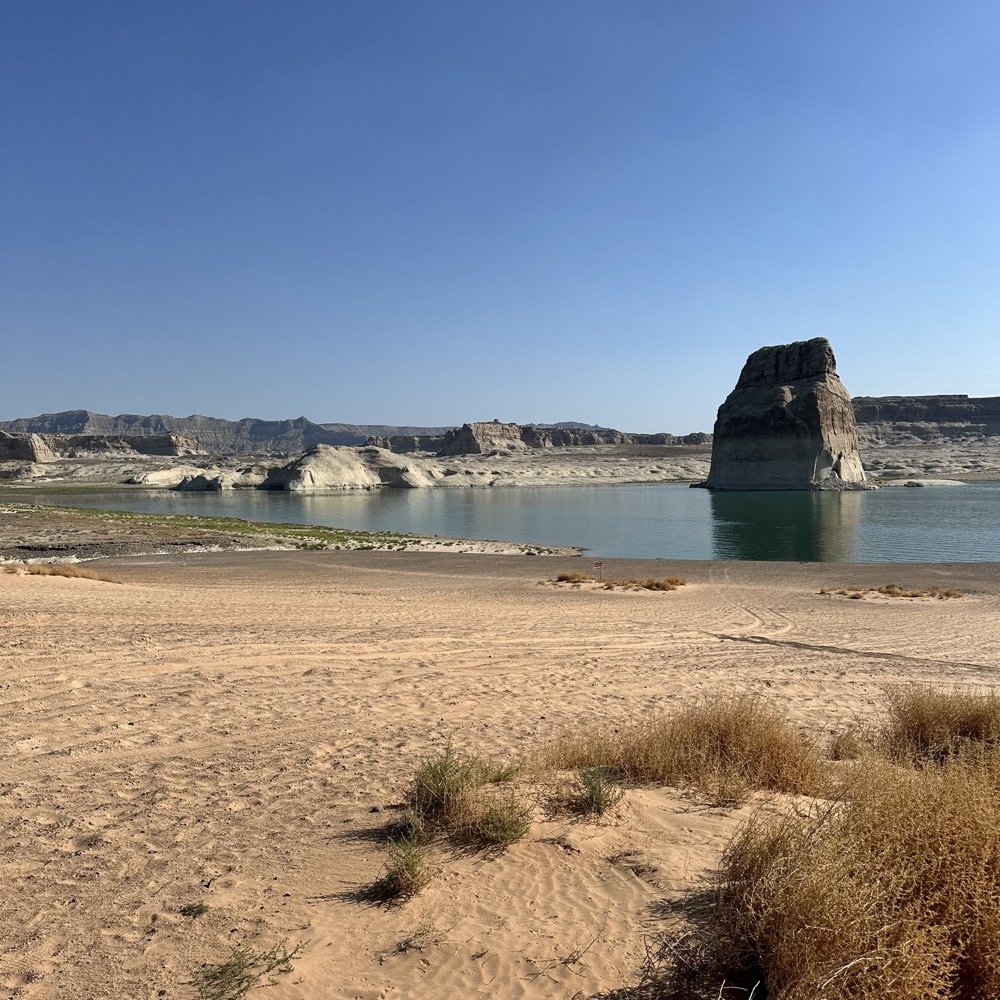
We packed up and headed north after this. We went to Lake Powell which has the Glen Canyon National Recreation Area (US-0645) around it (Lake Powell sits inside this NRA on the south shore entirely from what I could tell). Once we arrived, we figured out that the place where we wanted to setup for the night was actually in Utah! Do you know what this means? If I can get 10 contacts from here I will have gotten two parks…sure…but I will also get 2 STATES as well! That would really be awesome! So once we got back from eating supper at a really nice restaurant on the lake, we set up camp. This really means just opening all the doors and me getting the radio kit out... haha. The below photo is of our view from our campsite location, notice how many trees you see in this photo… count them all, I’ll wait. I can save you the trouble, it is zero, there were no trees… this is a problem if the only antenna you have is a 65’ long piece of wire that needs to be in the air to work well.
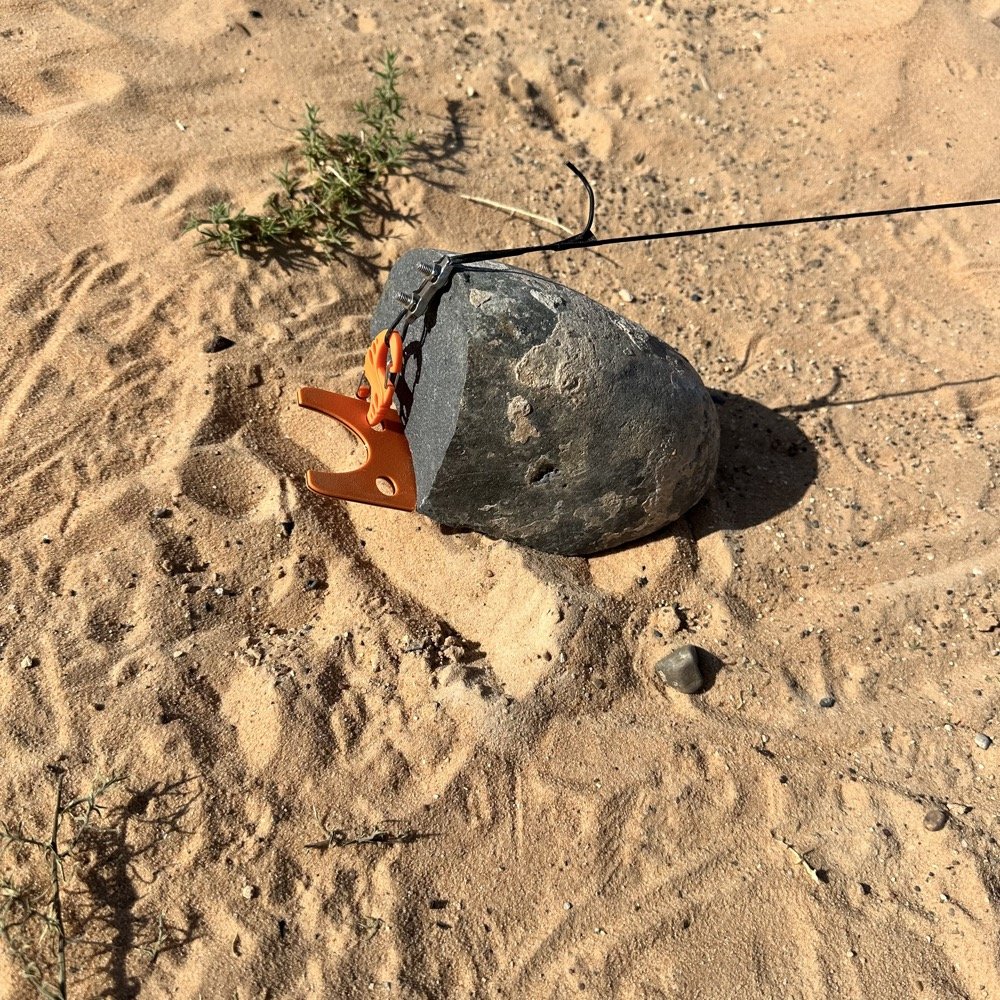
I dont know if it was desperation or creativity with what happened next, but I wanted to see if I could get the activation so this is what I did. I strung the antenna out away from the van to a rock you see in the photo below. Then I tied the other end to the top hinge on the van door. This technically put the feedpoint at about 7 feet above grade and the distal end of the wire at about 1 inch above the ground with some of the wire itself actually laying on the sand… I didn’t have high hopes here, but I figured that once the sun went down that I could possibly work some NVIS on 40 meters and be able to get ten locals in the log from the surrounding states. If you look closely at the photo below you can see where the wire in on the sand for about 10 or 15 feet out from the rock I used to anchor it with.
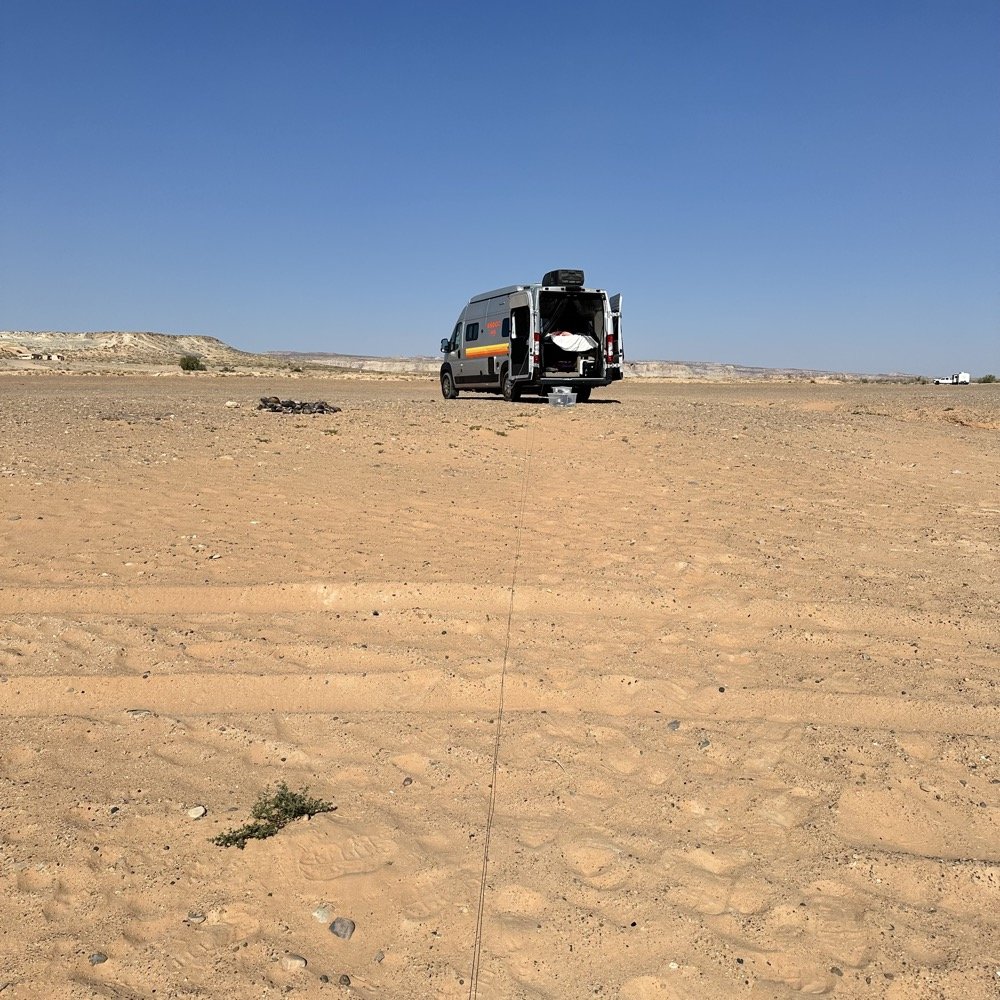
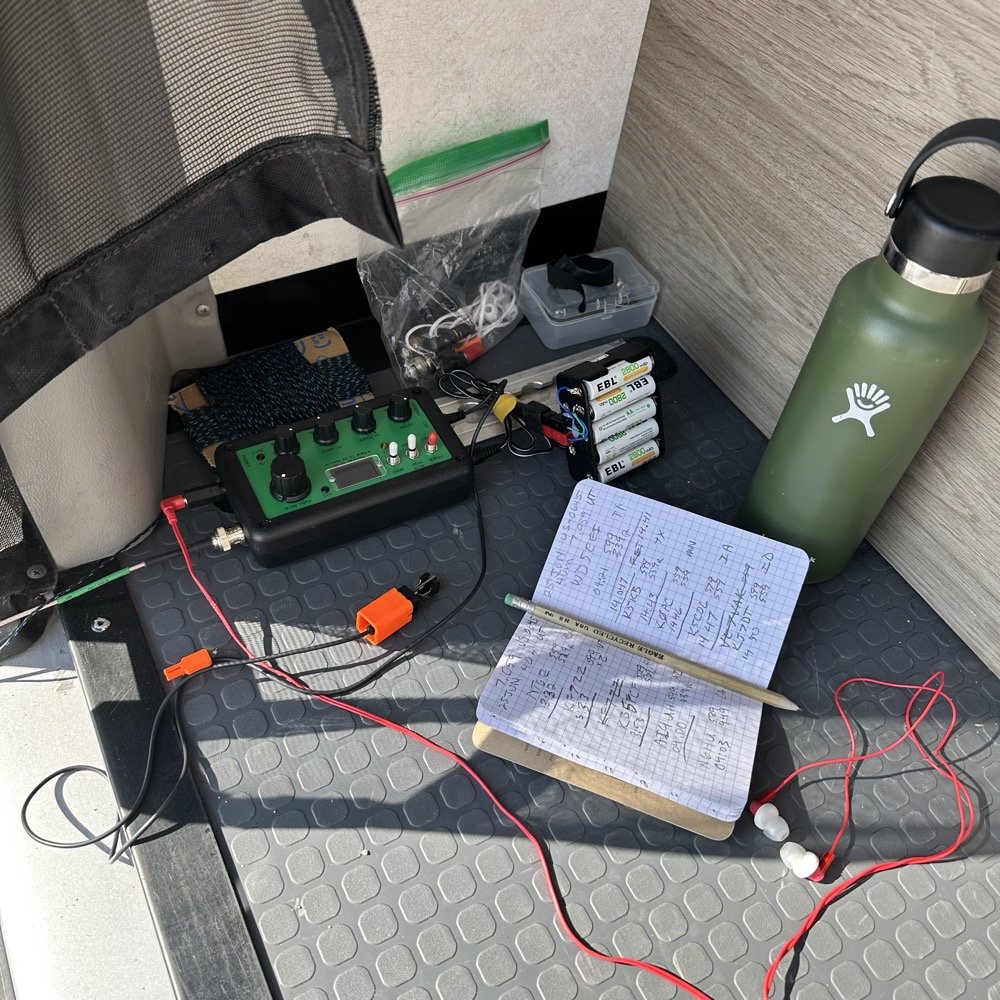
Next was to setup in the van and get the radio out of the direct sun as much as possible. I didn’t want to have the radio overheat from being in direct sun just as I was about to clinch the activation and all…lol. The back deck of the van worked perfectly for this location as it was like having a nice chair to sit on while I operated. It also kept all my radio widgets out of the sand as well which was a legit concern I had to start with at this spot.
I stayed in this spot for a good while on this day, right at two hours to be a little more specific about it. I started hunting around a little to start with and snagged AE4TC in Virginia right away on 40 meters no less! This gave me hope, but as I was about to find out, this must have been either ducting or a short band opening as it took me right at two hours to get 11 calls in the log before I powered the rig down for the night. I left it all assembled though so I could fire it up the next morning for a little while before we left to see what I could do on 20 meters in the day time. I was able to get 4 more calls in the log like this with one being my old friend Paul (KJ7DT) up in Idaho! I did recognize a good many calls in the log this time as well which is always cool. But to get back to the activation at hand, once setup, I grabbed the first call on 40 then I though I would try to see what 20 meters was like, so I hopped over to 20 meters to try it for a bit. I was able to add once call to the log on 20 meters before going back to 40 meters for the rest of the evening. I settled in with my headphones and simply started hammering out the automated CQ message and listening to see if someone could hear me. Over the next two hours the log slowly filled with calls till I had enough to secure the activation before heading off to bed. That made me rest easy, knowing that i had the activation in the bag before even trying to find anything the next morning. That was my goal that evening anyway and the main reason I staying on the air so long chasing after 11 QSOs. All of this ran on that one set of AA batteries too. Also, there was no recharge overnight for these batteries either, but I did charge them after the first activation so they were topped off before embarking on this park.

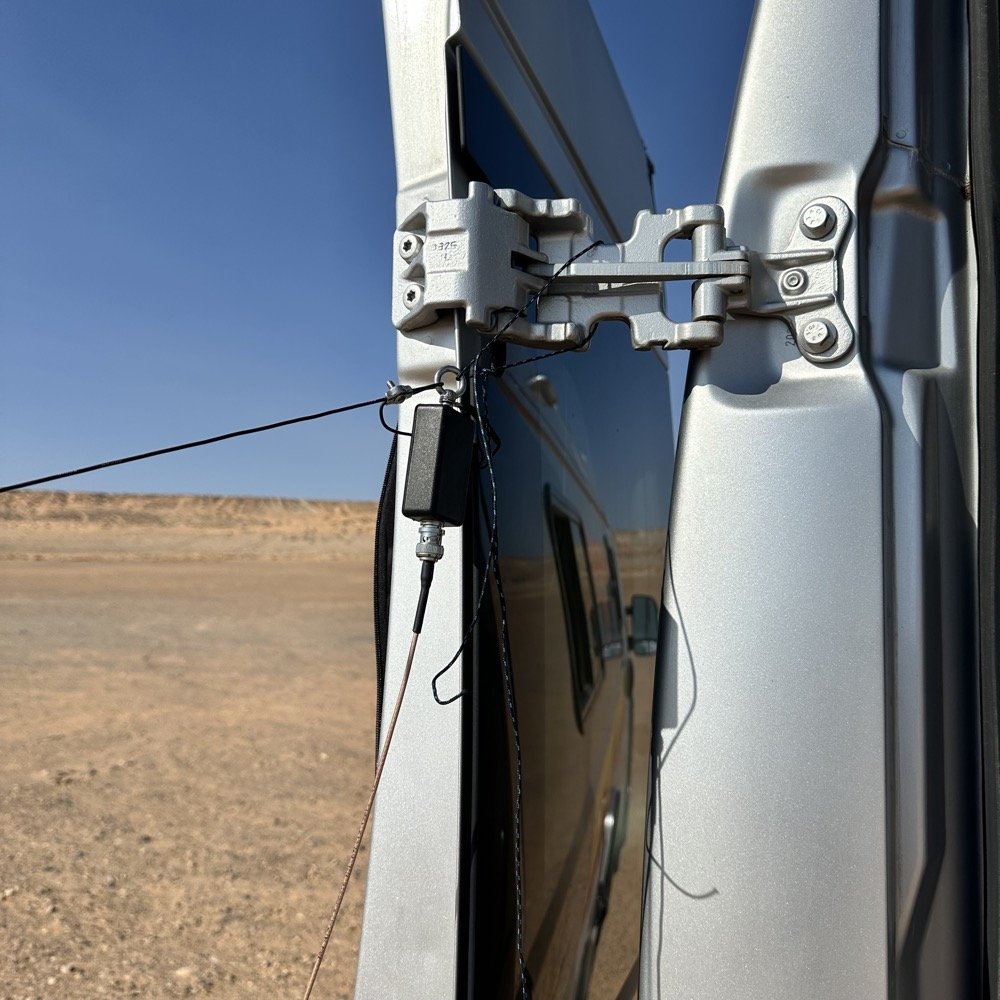
All in all, it was a great trip with some wonderful CW POTA as well as many wonderful days of travel mixed in as well. If you have ever considered going out west, it is a wonderful place, but be ready if you go in the summer, it can get REALLY hot…
WK4DS - David
72
potaarizonautahpenntektr-35cwefhw antennawire antennabattery powertravelham radio