Rainy day POTA is awesome!
I love going to a park during the week, I have the whole place to myself. Today was no exception for the most part… ~David WK4DS
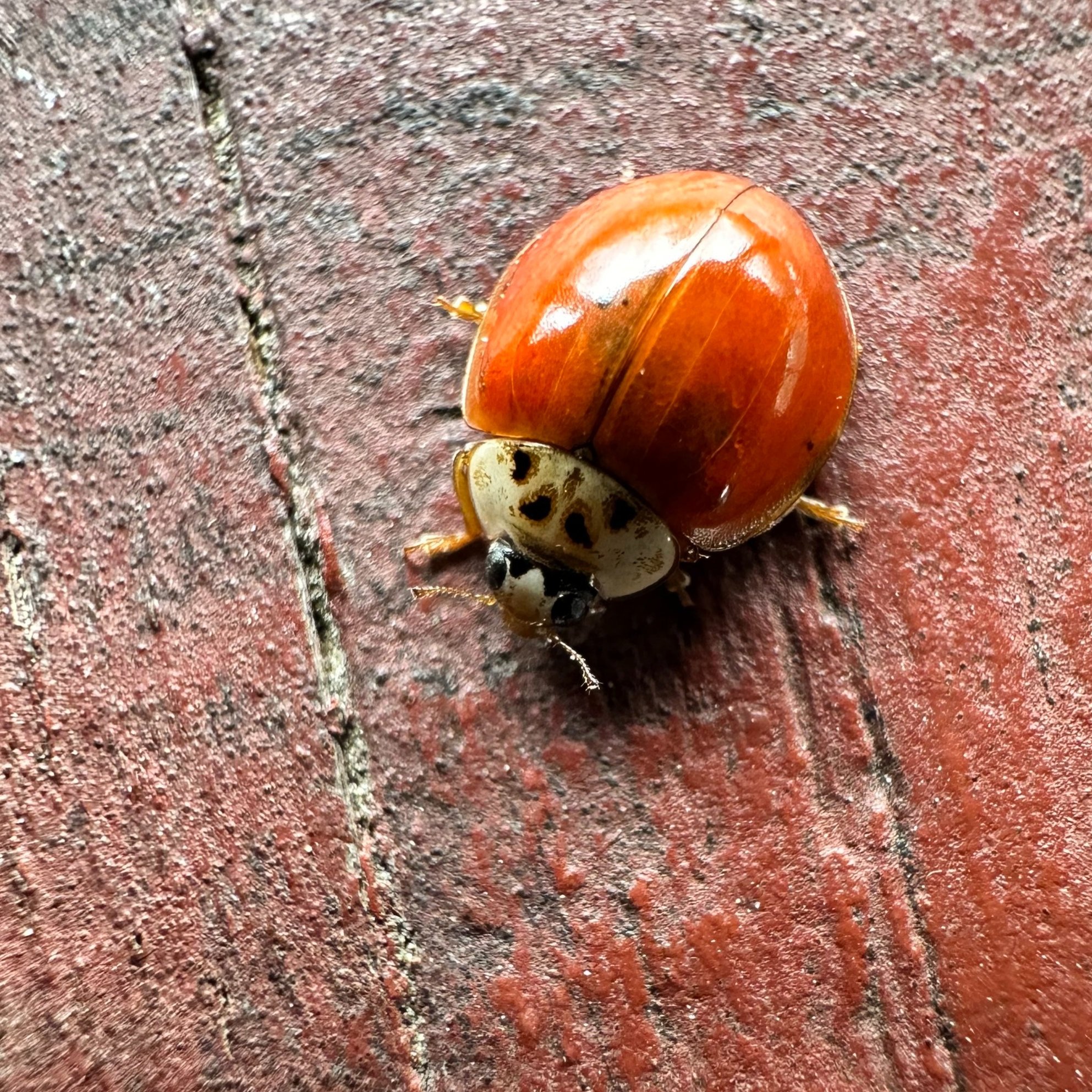
Seems this little guy wanted to be a part of the activation really bad and kept lingering around the station once I got it assembled. LOL I too this photo of this lady bug with my iPhone, I will be honest here, I was kinda surprised that it came out so well. Did I mention it was December 10th and this is supposed to be the middle of winter? Why are lady bugs wandering around in the middle of the winter???
Once I finished marveling over the lady bugs, I decided to put the station together and run the 41’ random wire and the Penntek TR-35 again, but this time with a fully charger battery. I also set it up like I did recently at DeSoto state park with the Elecraft T1 tuner remote tuning the random wire. I am waiting on the components to come in to build the automatic tuning cable to make the TR-35 and the T1 work together and tune without having to walk over to the tuner to tune it. Sort of like the Icom IC-705 and the factory auto tuner that goes with it. I had that setup too and it works really well, it also uses a cable to control the tuner like I am going to be building for this system. The difference is that I can pretty much use the cable I am going to build with any radio that sends CW…
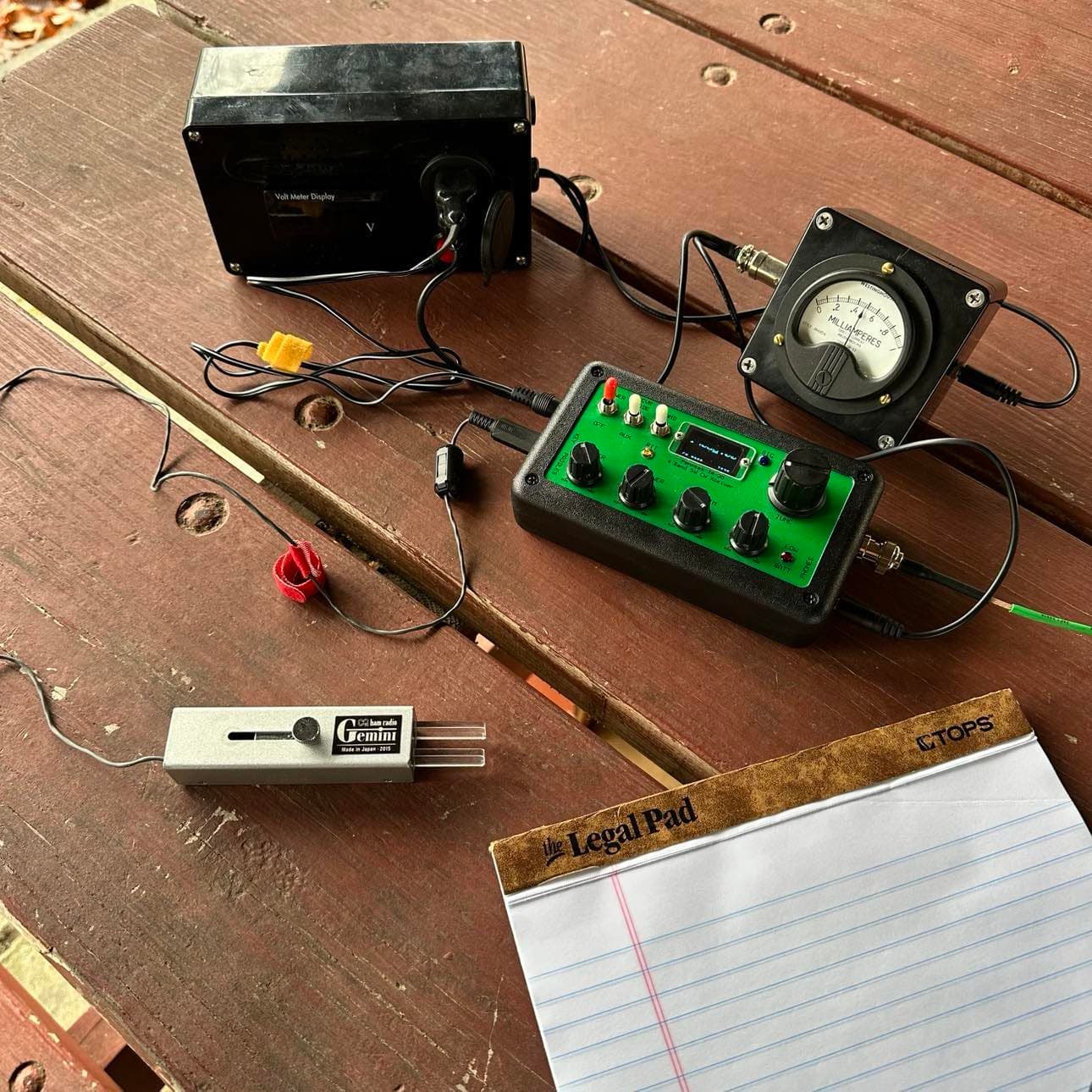
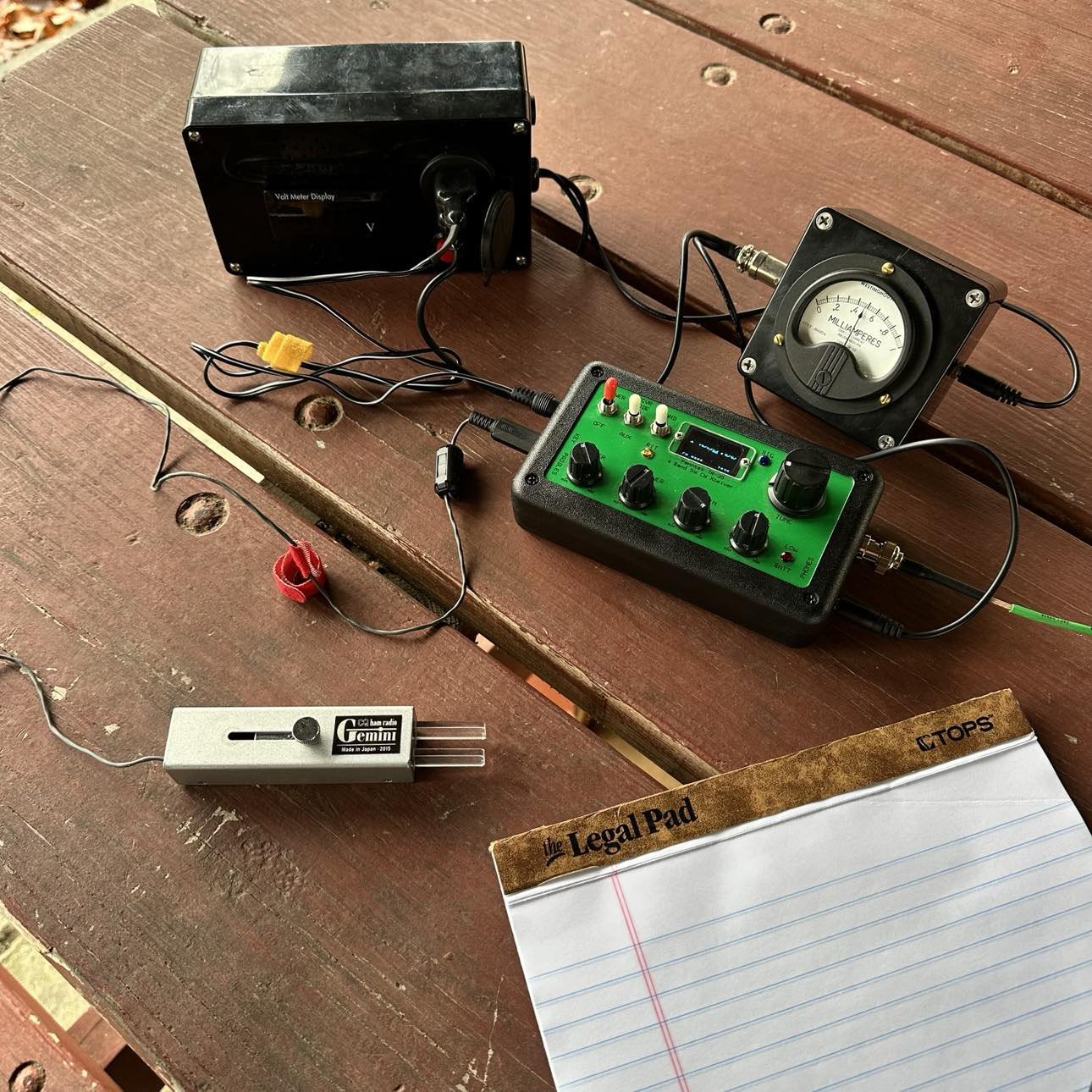
Below is the station for today as I used it. The Penntek TR-35 is a wonderful little radio that I am so glad I was able to get before to maker retired. They are now out of production because of this so the only way to get one is to pick it up on the second hand market. Also, dont worry about the finals (like radios in days gone by) as he designed the amplifier circuit with current fold back so it is impossible to damage the output stage. It even has temperature sensing and will turn down the transmit power if it starts to get too hot. Talk about thinking things through…
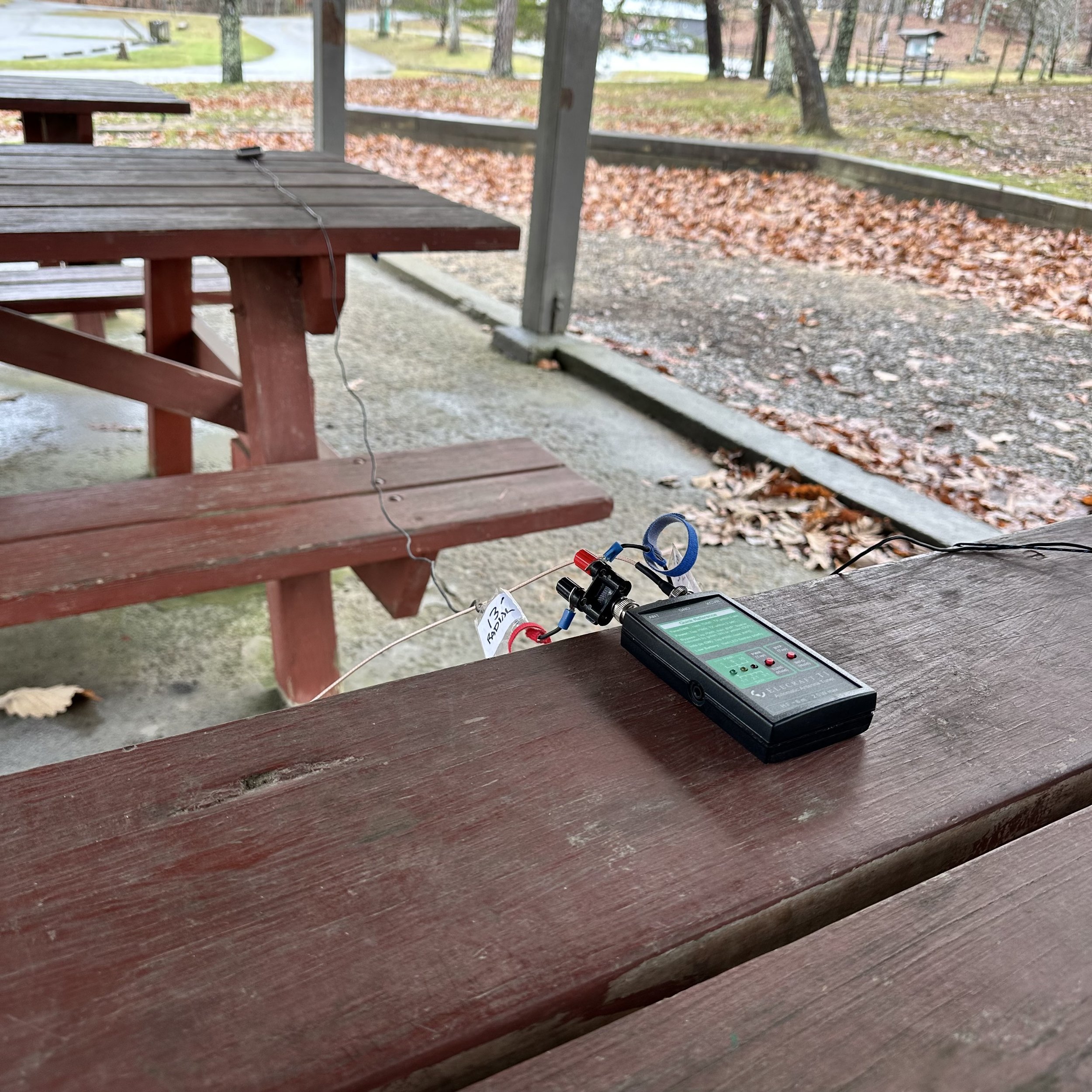
Here is the tuner in location for the day. i just laid it on the table on the opposite side and ran a piece of ABR Industries coax over to it. I like using the ABR coax that I have as it has several ferrite beads on it that act as my common mode choke so I dont have to use my homebrew one. Simplifying the setup a little. Also the tag that says 13’ is wrong now, I had to cut the radial a little for a piece of wire at some point and forgot to pull the label off so this 13’ radial is closer to 9’ actually and this worked fine for everything I did today with my 8 watts of forward power.
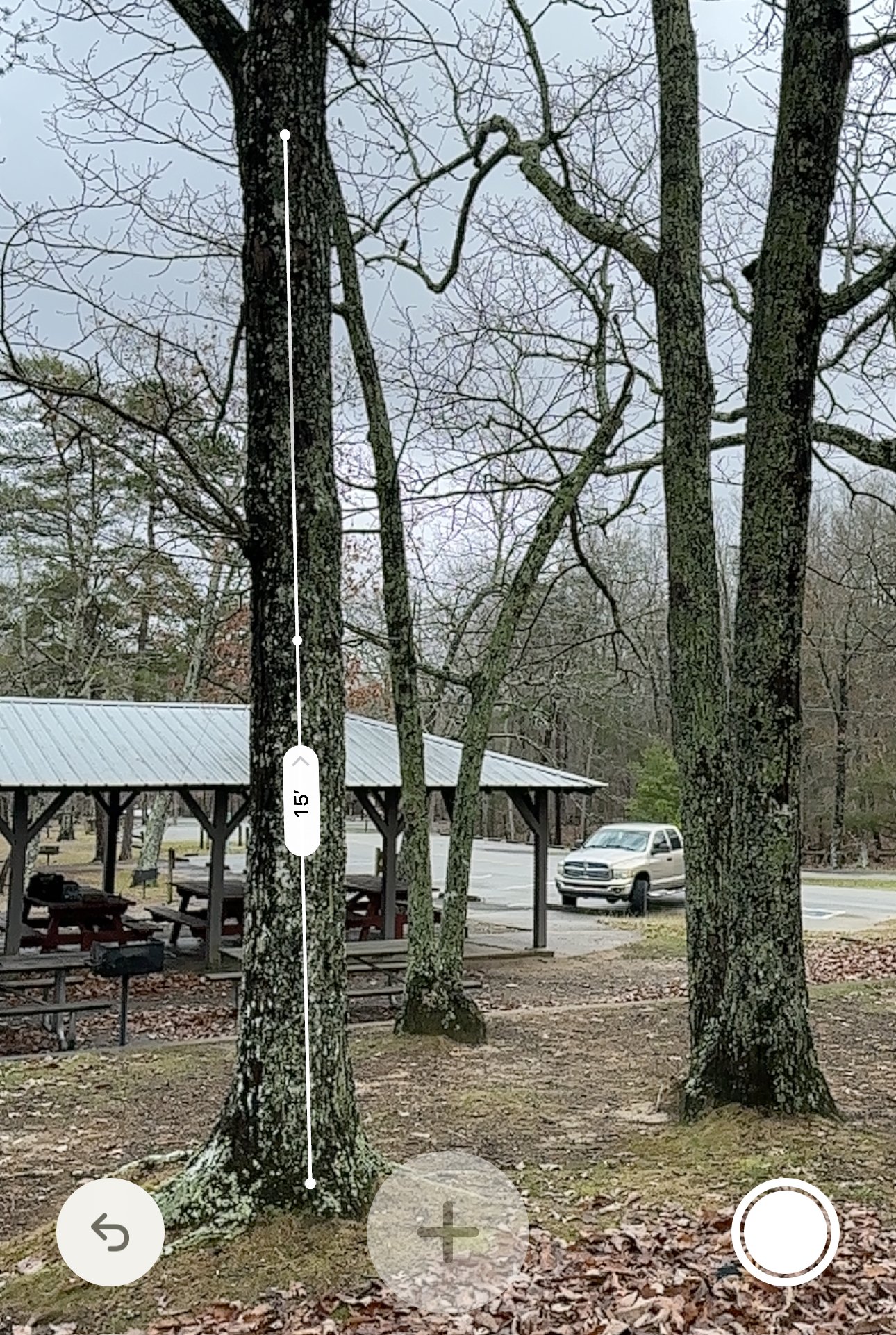
The photo below shows something that a lot of people seem to worry over for no real reason. If you will look to the right of the tree at the 15’ mark you can see the end of the antenna held up by my throw line. That is how high my antenna was above grade on the highest end and it was facing almost due west. The coverage was pretty much the entire eastern seaboard of the USA and I had a couple that went out west really well. (I am thinking these are probably their result of their superior antenna systems and not my pathetic setup at a park) The point is that i measured the tree near the top insulator and it was only about 15’ above grade so dont let a low antenna stop you from activating a park. This one worked great and it filled three pages of my log book with ease. To keep the wire in location, I simply tied it off at both ends with my cord and used bowline knots so I could easily dismantle it when I finished.
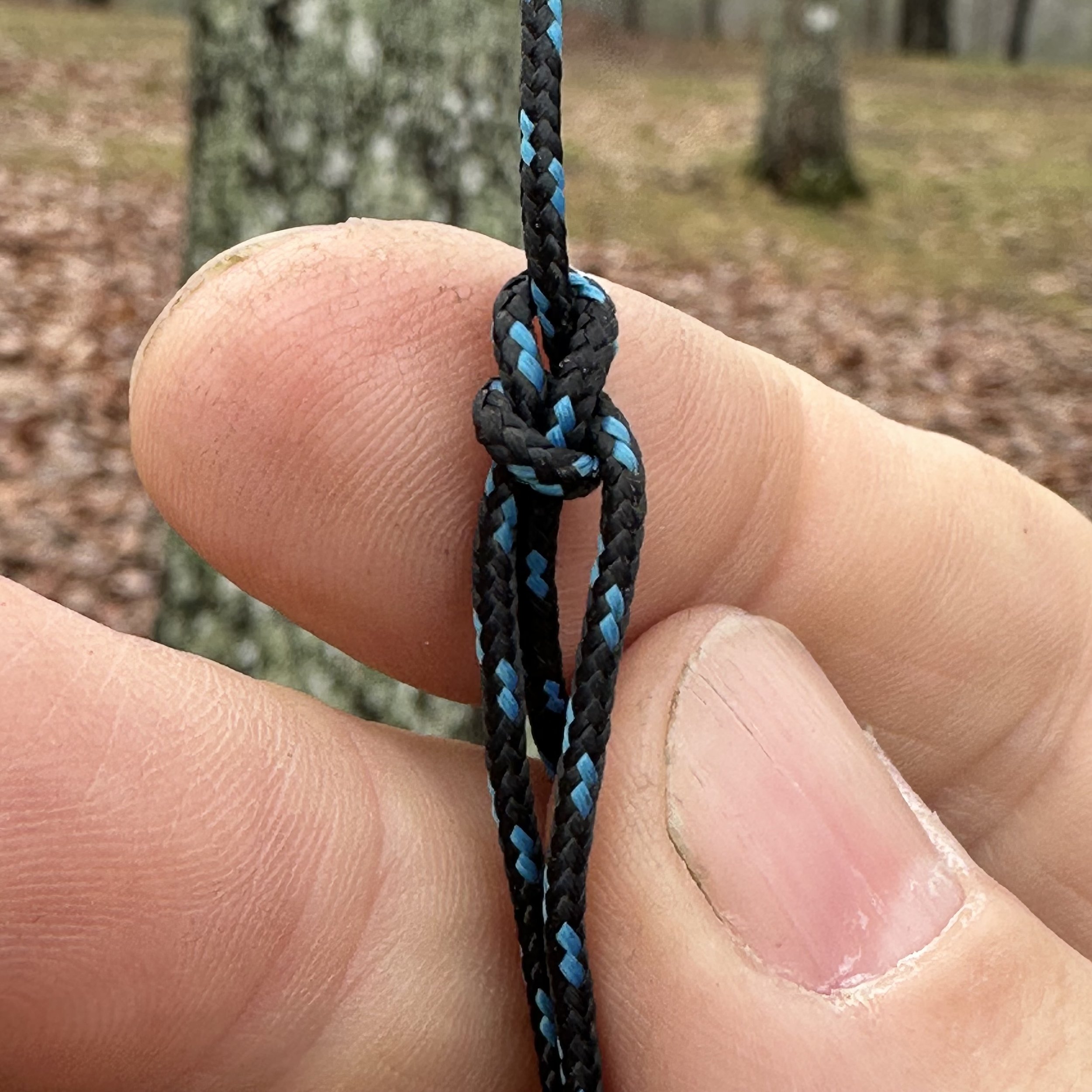
The bowline knot is probably the most useful knot I have ever learned to tie. It is right up there with the taught line hitch and it’s derivatives. Both of those get used to this day by me for various things. Below is where I had tied the top insulator to the cordage. This little knot just works so well and almost falls apart when you need to untie it later.
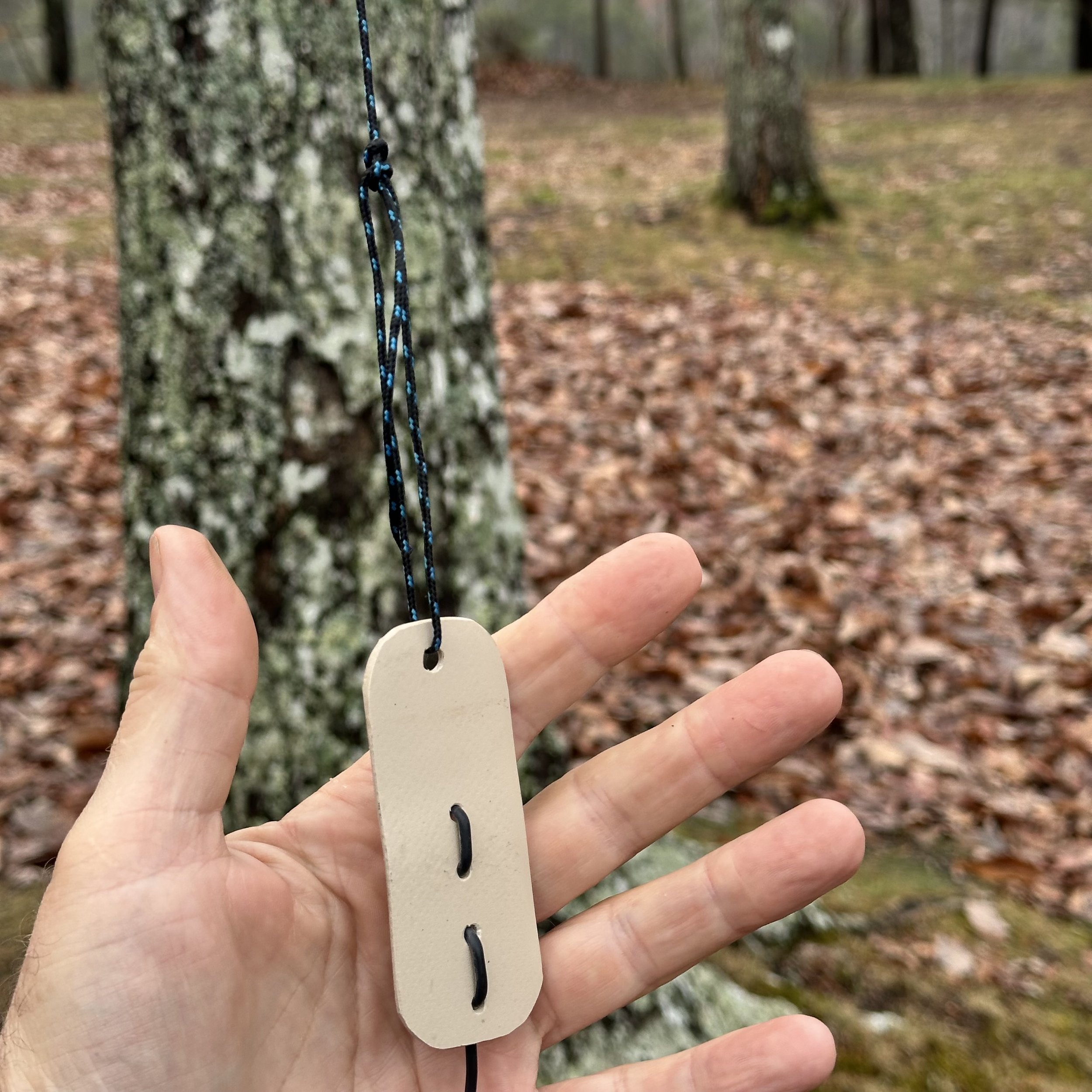
My antenna insulators are homebrew as well for my wire antennas. I make them out of a plastic sheet called Kydex. It is a thermo-moldable plastic where you heat it up to about 330 degrees and it gets really pliable. Someone can then shape it with simple techniques and molds and such. People even vacuum form it these days. I will save little scraps of it, then use them for things like this. It comes in really handy for little projects like that.
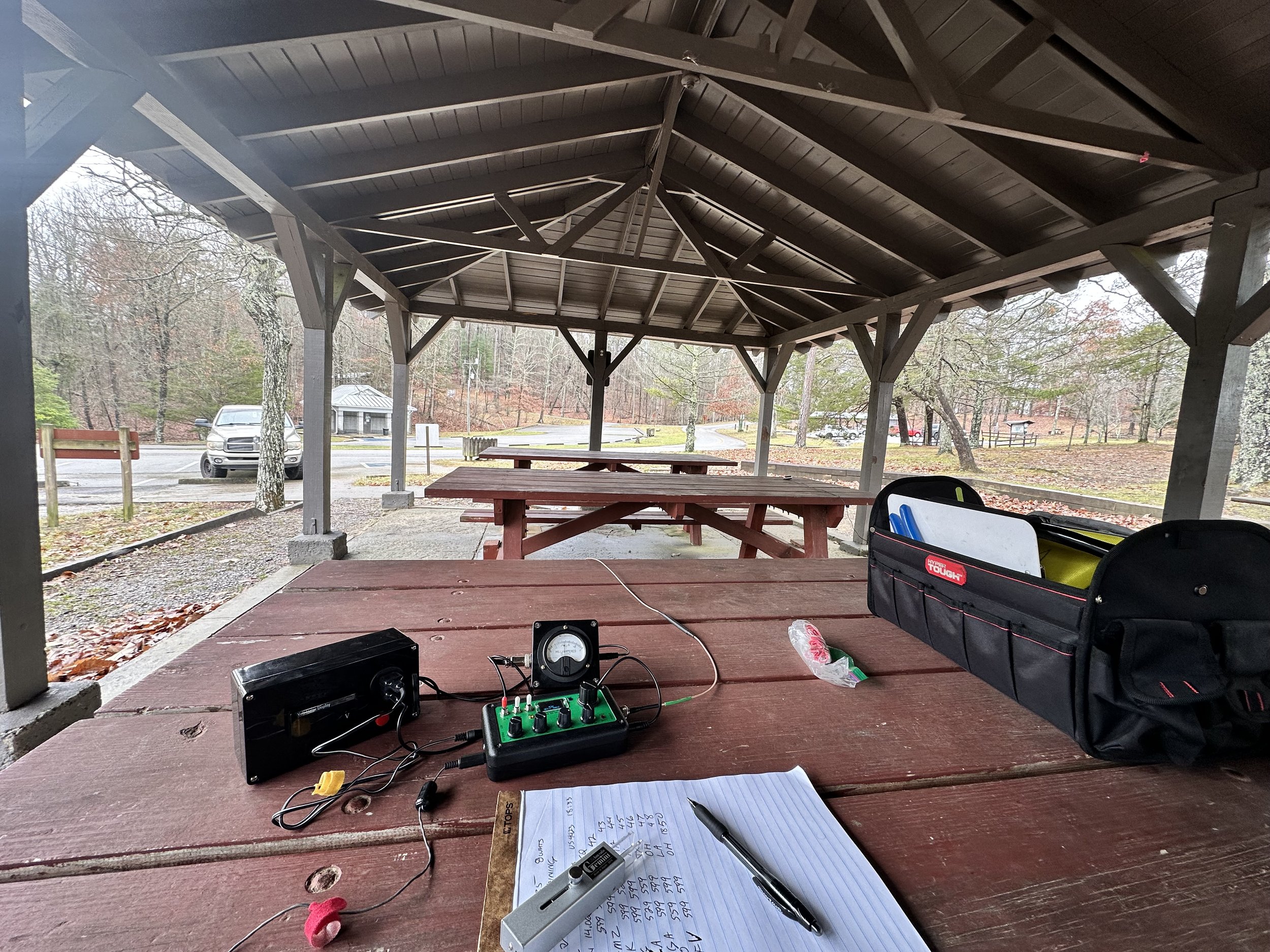
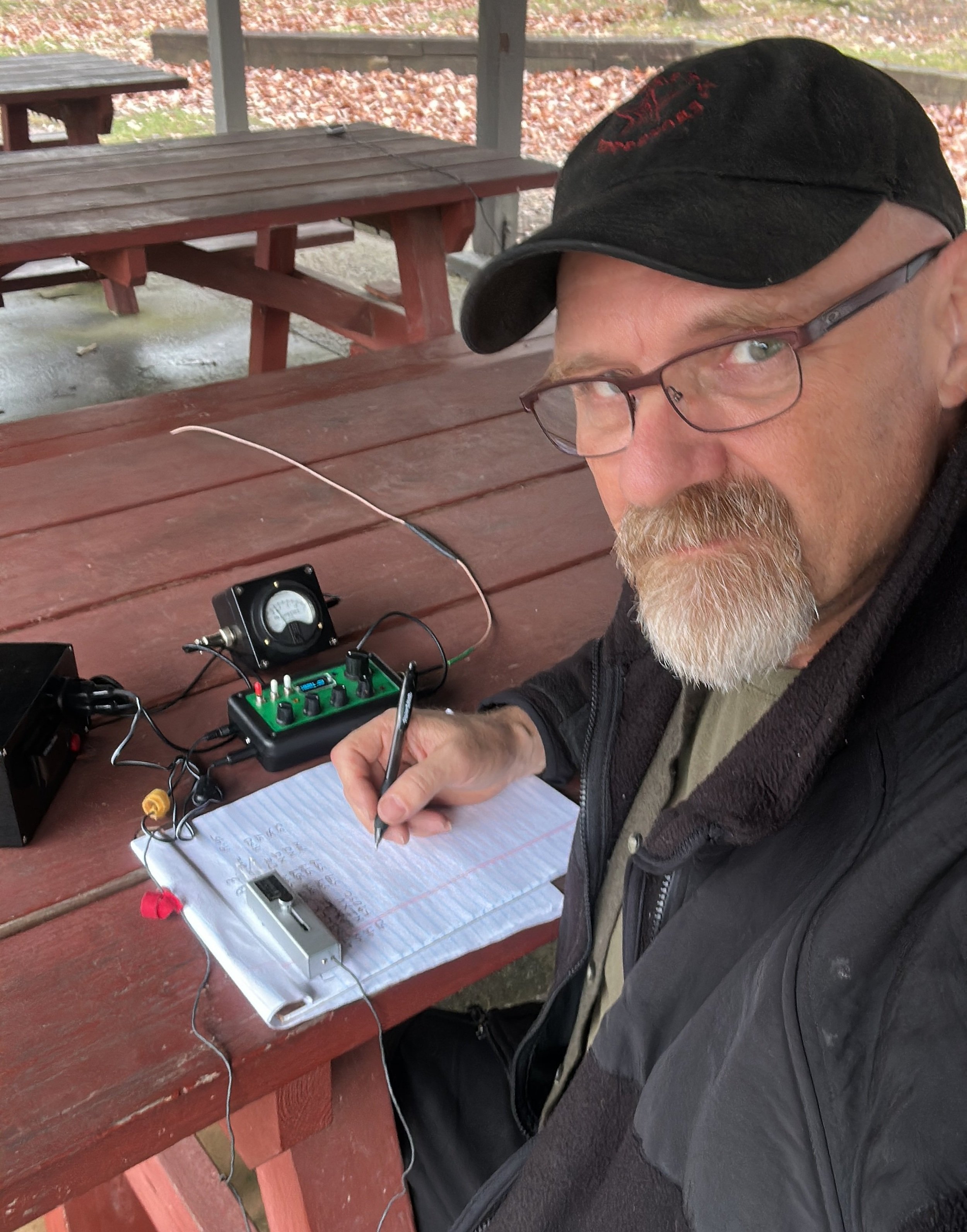
Above is what my view looked like almost the whole time today. I was able to setup in one of the pavilions since they were not reserved for the day. This also worked to my advantage since I was also able to get outside in December and stay out of the rain too. This is the trifecta of fun for me. Did I mention it was also 60 degrees? That is crazy warm so that is another reason I wanted to setup outside today. I get to use the pavilion, it is warm in the winter, and I also get to run the rig shown above like I meant for it to be run with all the little extra parts I made for it.
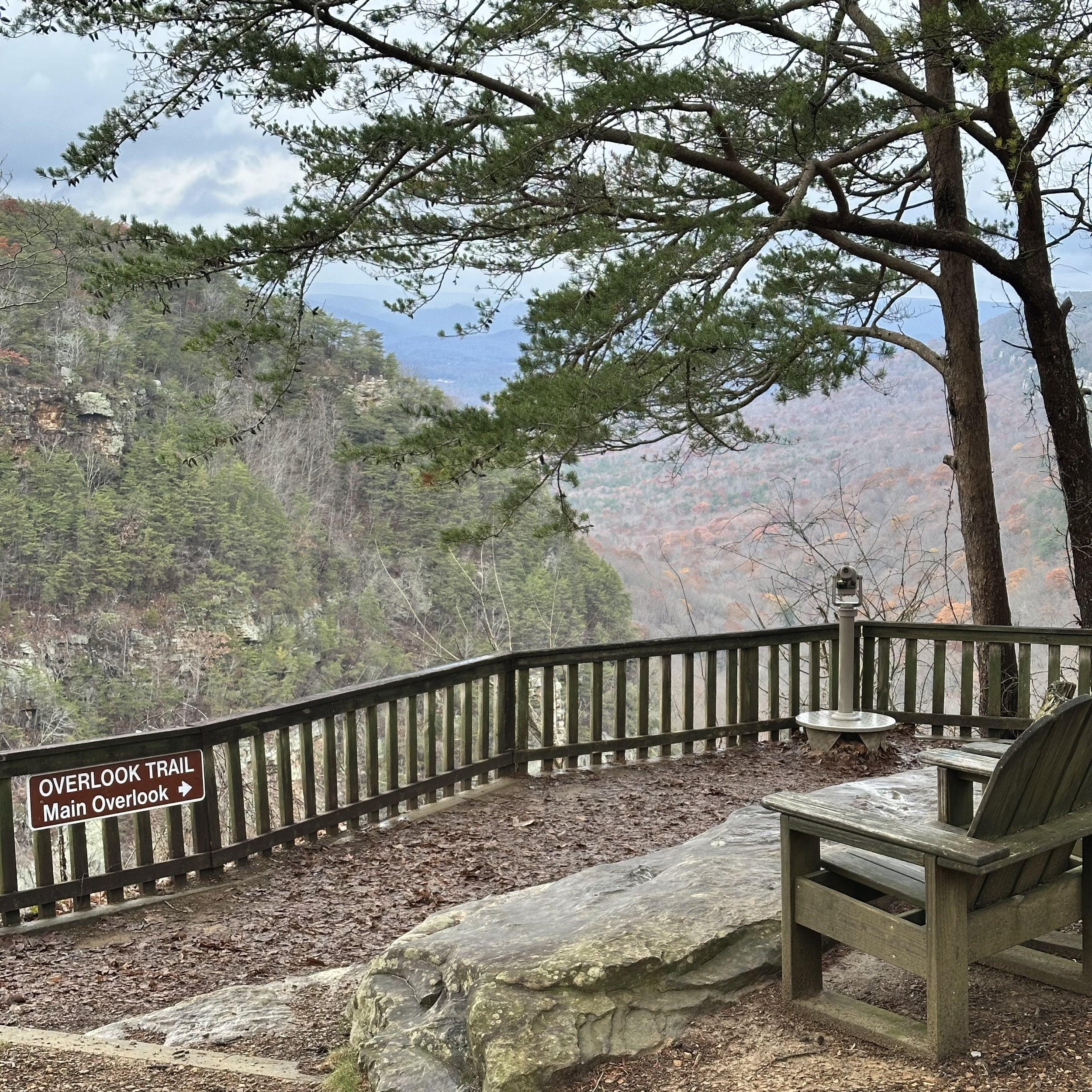
Below is what the view looked like just a few yards away from my location. The town of Trenton is just behind the mountain on the left in the mid ground of the photo and on top of all that, the water falls have water again! So if you wanted to visit this park, now is the time, if you wanted to see flowing water falls. In the heat of the summer, they are usually not flowing well but in the winter, we get a lot more rain so they are flowing much better now.
In the below photo, you can see the ferrite common mode choke on the ABR Industries coax I was using on this day. I really like quality things like this, it just makes operating so much easier.
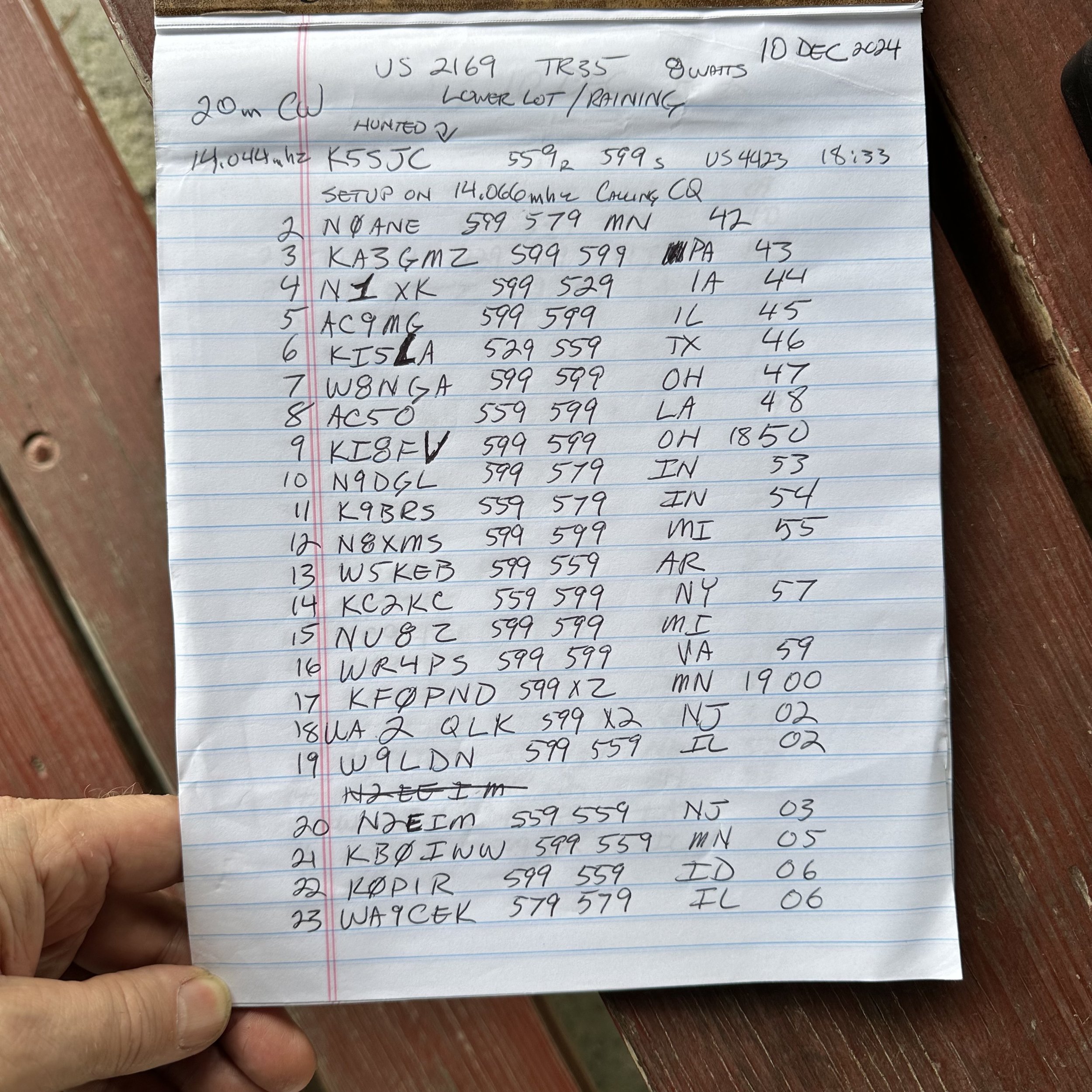
Now I am finally getting to the part where I talk about the activation itself. Once I got started, I hopped on 20 meters where I knew I could secure the activation pretty easily as there were a lot of ops on 20 at the time. Little did I know what was about to happen… lol.
I first started by hunting K5SJC, who I have worked several times and he gave me a good report which bolstered my desire to activate even more. You see, I was running QRP today so I didn’t have a lot of power to operate with. Armed with this new found confidence, I found an opening and started calling CQ, this is when it got busy. In the next 54 minutes I worked 45 contacts. That is some sort of record, I am sure of it! HaHa! The band was on fire for sure, just look at those signal reports coming back to me. I dont ever see this amount of 599 reports for my TR-35, it just doesn’t happen…
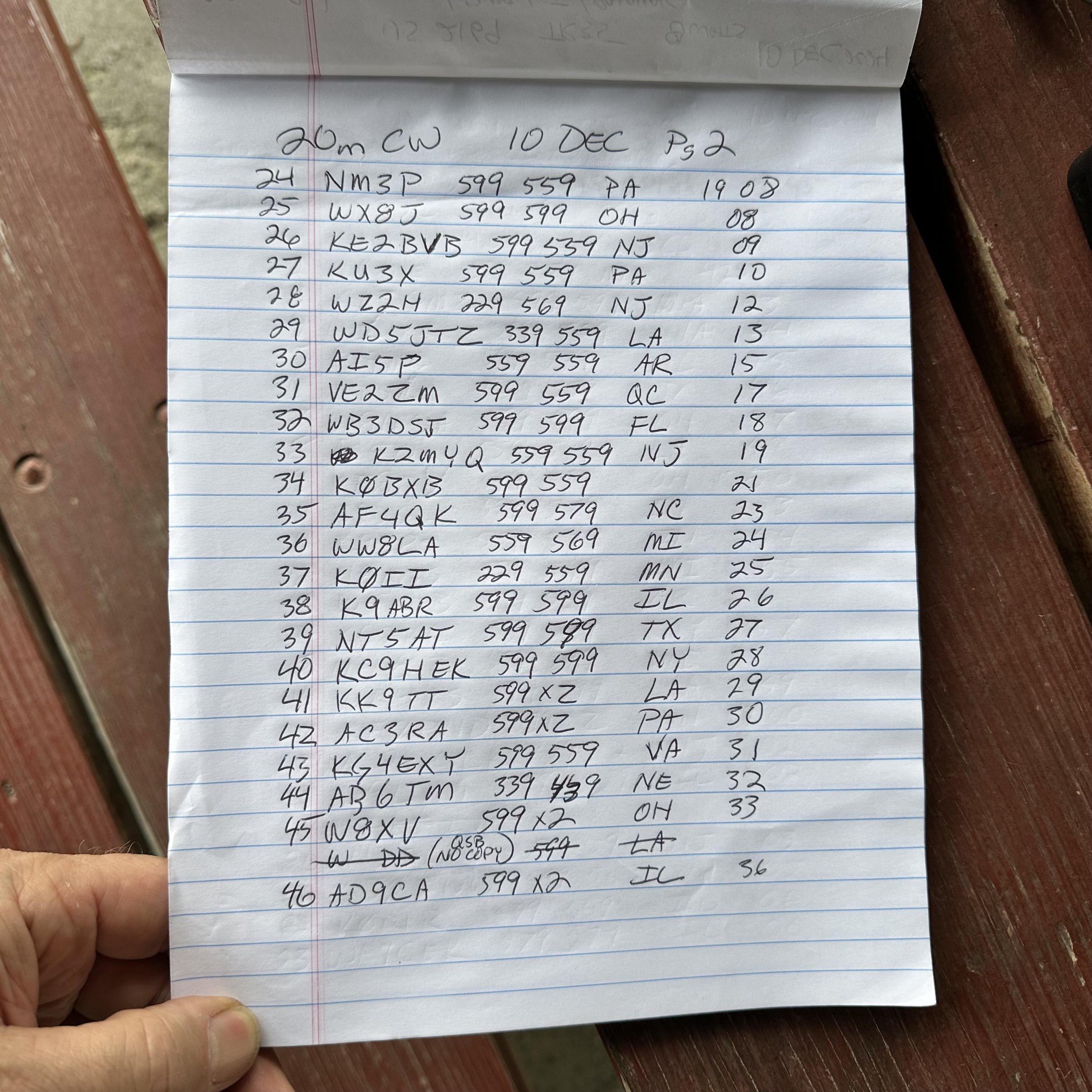

After the phenomenal run on 20 meters I still had a little time left so I figured I would hit the 17 meter band to see what I could scare up there. The 17 meter band didn’t disappoint either. I do think it was suffering from fading though as I had a burst of contacts all at once then it was like they just vanished. 5 minutes of madness and then silence. Well, once I realized I wasn’t going to get anything else on 17 meters, I moved down to 30 meters.
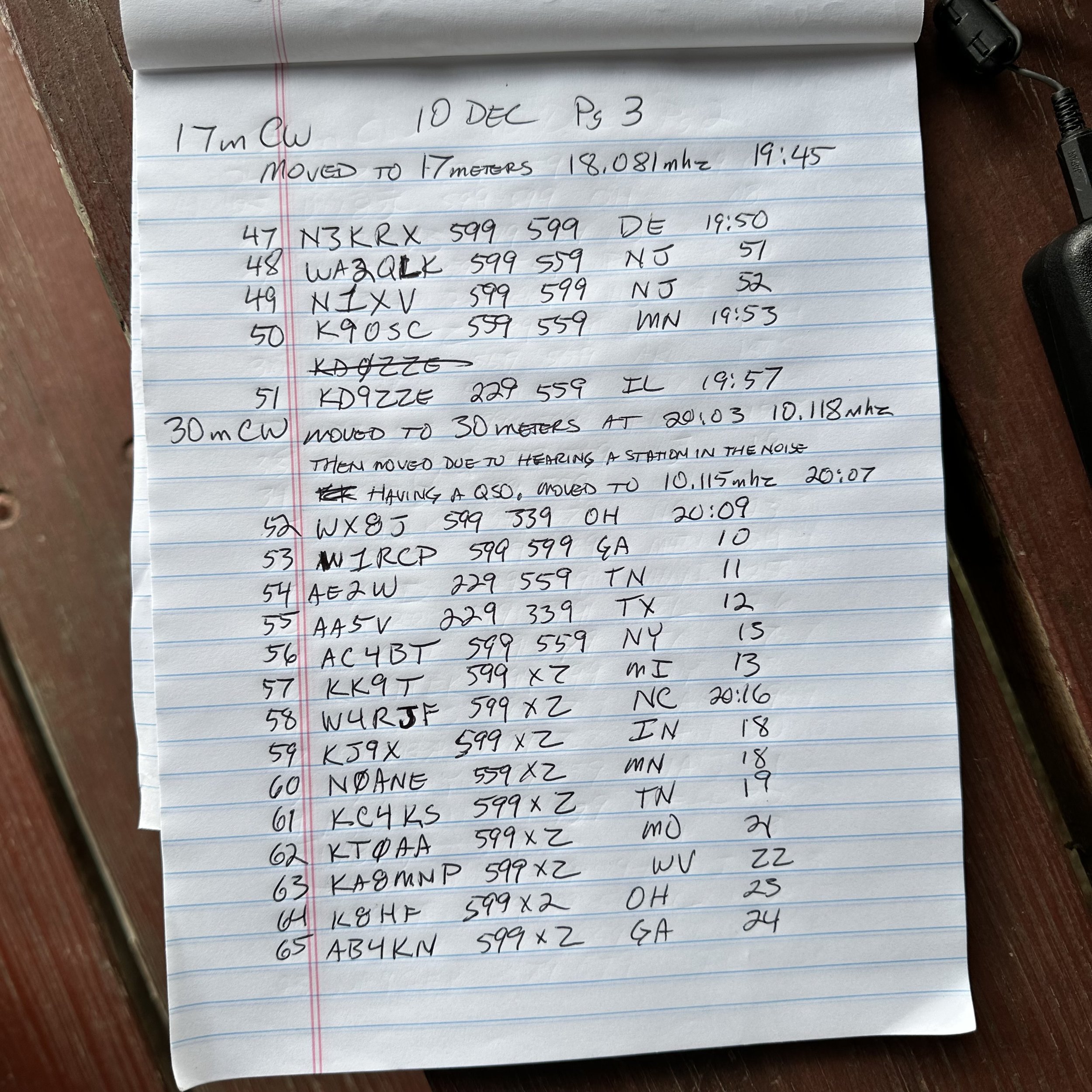
30 meters for me is a special place, it is a band that both acts like 40 meters, allowing for closer NVIS contacts as well as 20 meters with the ability to get some distance out of it. This is exactly what happened to me here too. I was able to work several stations in nearby states in fairly short order along with some states further away as well. It was nice to get Georgia in the log a couple of times today too, that is kinda rare unless I am on 40 meters. 65 contacts in the log later and I was done! I had to go home and get ready for hosting small group and get this log uploaded to the POTA website too. All in all, this was an awesome day in the field and I hope you enjoyed me telling you about it.
72
WK4DS - David
#block-yui_3_17_2_1_1735745149178_12070 .social-icons-style-border .sqs-svg-icon--wrapper { box-shadow: 0 0 0 2px inset; border: none; }
[
](https://www.youtube.com/@HamRadioToday)[
](https://www.instagram.com/ham.radio.today/)[
](https://www.facebook.com/groups/hamradiotoday)[
](https://www.tiktok.com/@ham.radio.today)[