Sometimes a simple POTA activation is better…
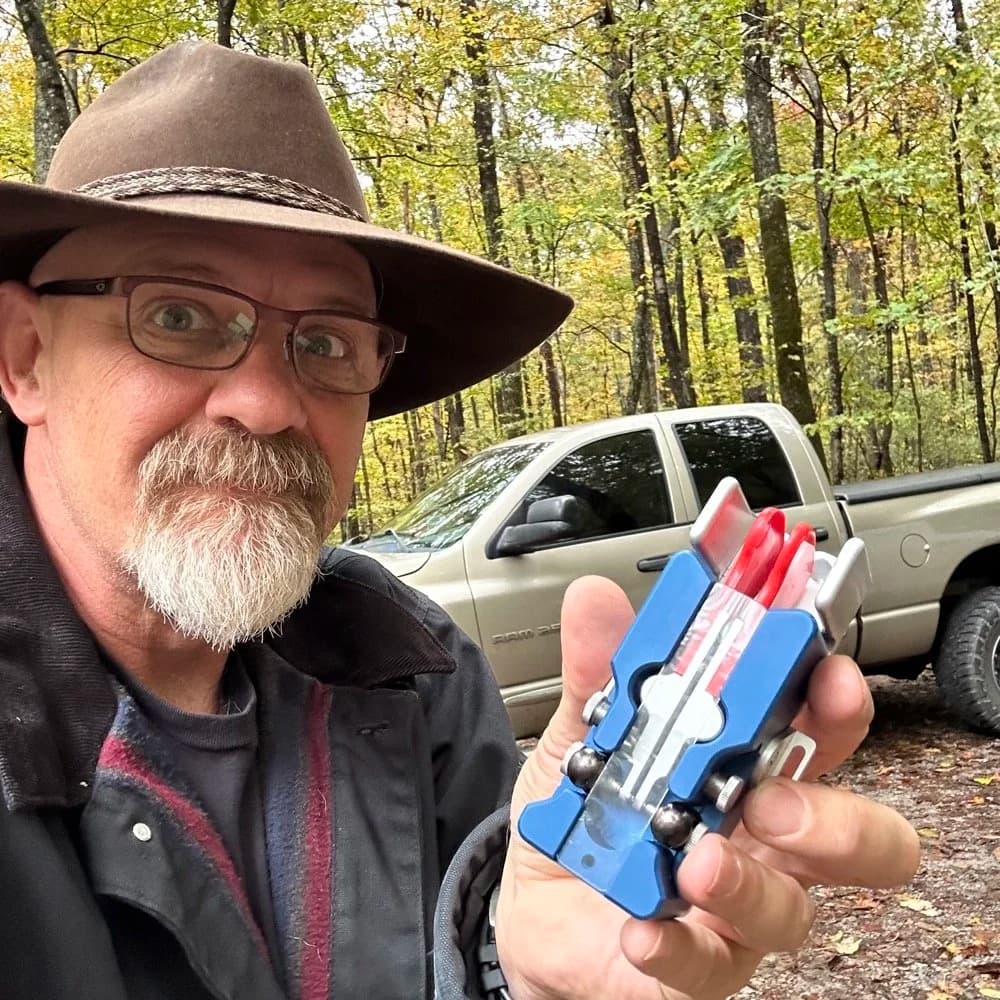
When you want to just sit down and have some fun, you will normally move to the mode you like the best…
Today saw me wanting to stay dry and have some fun at my local park so I decided to setup and work some CW for a while. The initial plan was to only use CW, but I couldn’t leave FT8 out of the game when it came down to it…lol. I really enjoy using CW for my POTA operations, I don’t ragchew with it like I once did, but I am starting to long for that as well. Seems that I have lost some of the transcription ability that comes with ragchewing on the air. I have done POTA so long now that I have trained my brain to listen for certain information and to exclude other info from the code that is coming in to me. If someone sends information that is not part of the usual exchange, I will have to think about it and usually lose the first word or two while my brain changes gears and starts listening for other information instead. Today brought that to light with a person asking me where I was at. It blew my mind for some reason. They had to ask a second time and on the second pass I was able to copy their sentence and understood what they were asking for. We can get so used to a certain way things work that when it works in a different way, we can’t cope and have to reset ourselves to be able to engage properly.
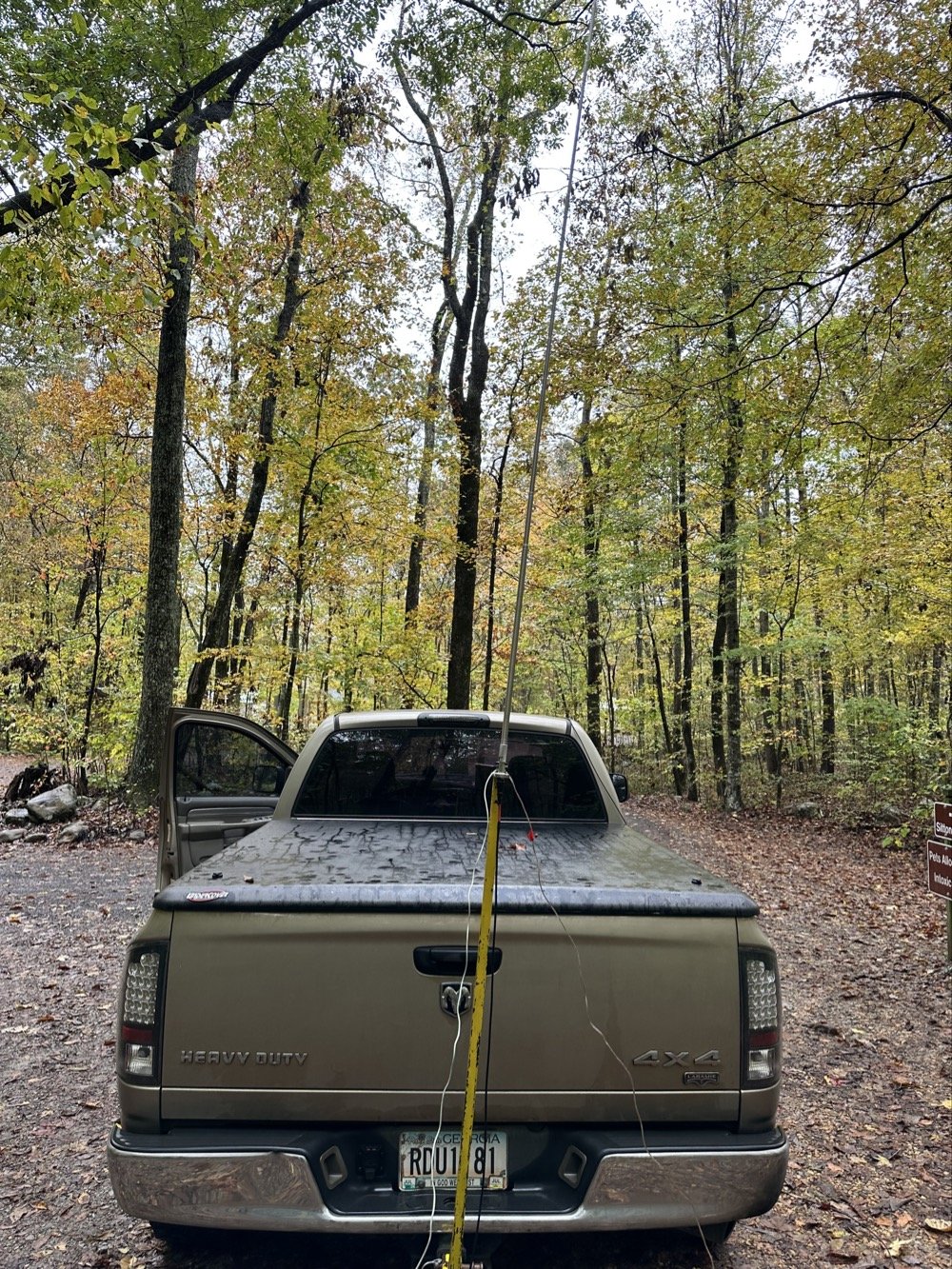
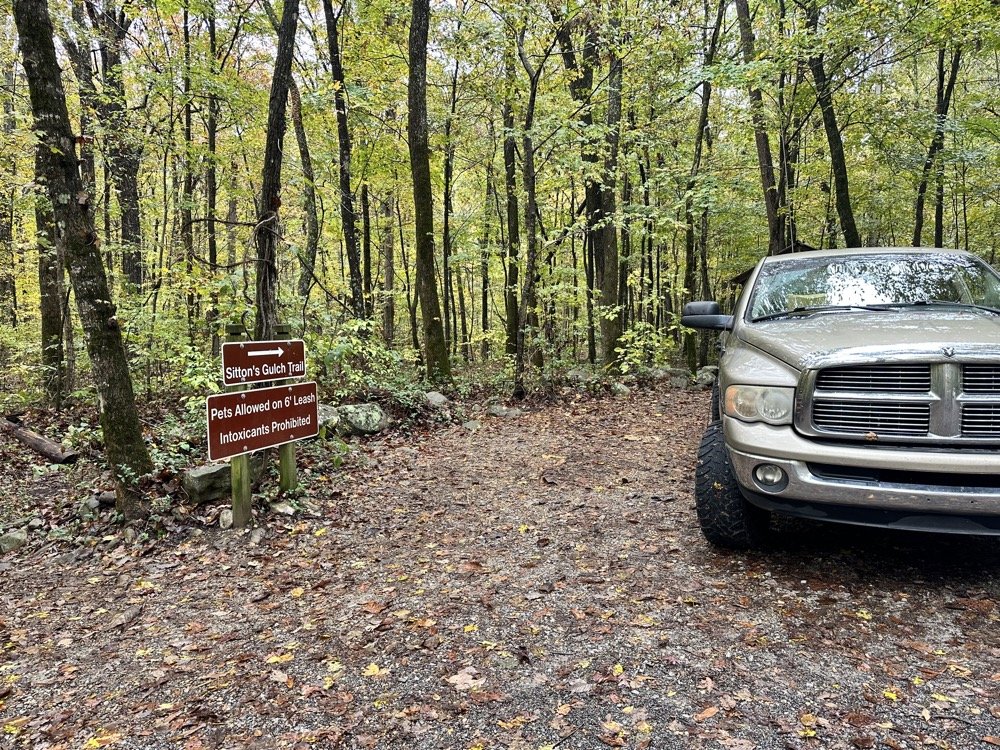
I went to Sitton’s Gulch again today as it is closer to me and gives me a good bit more “air time” over the top of the mountain position. It also works out that most of the stations I can hear are not blocked by the location of the mountain anyway as my log today showed. For radiating purposes, I got out the 213” vertical and tuned it up for 20 meters with the two usual radials as shown below. This is a simple task with the nanoVNA… how did I get along with this little wonder of technology???
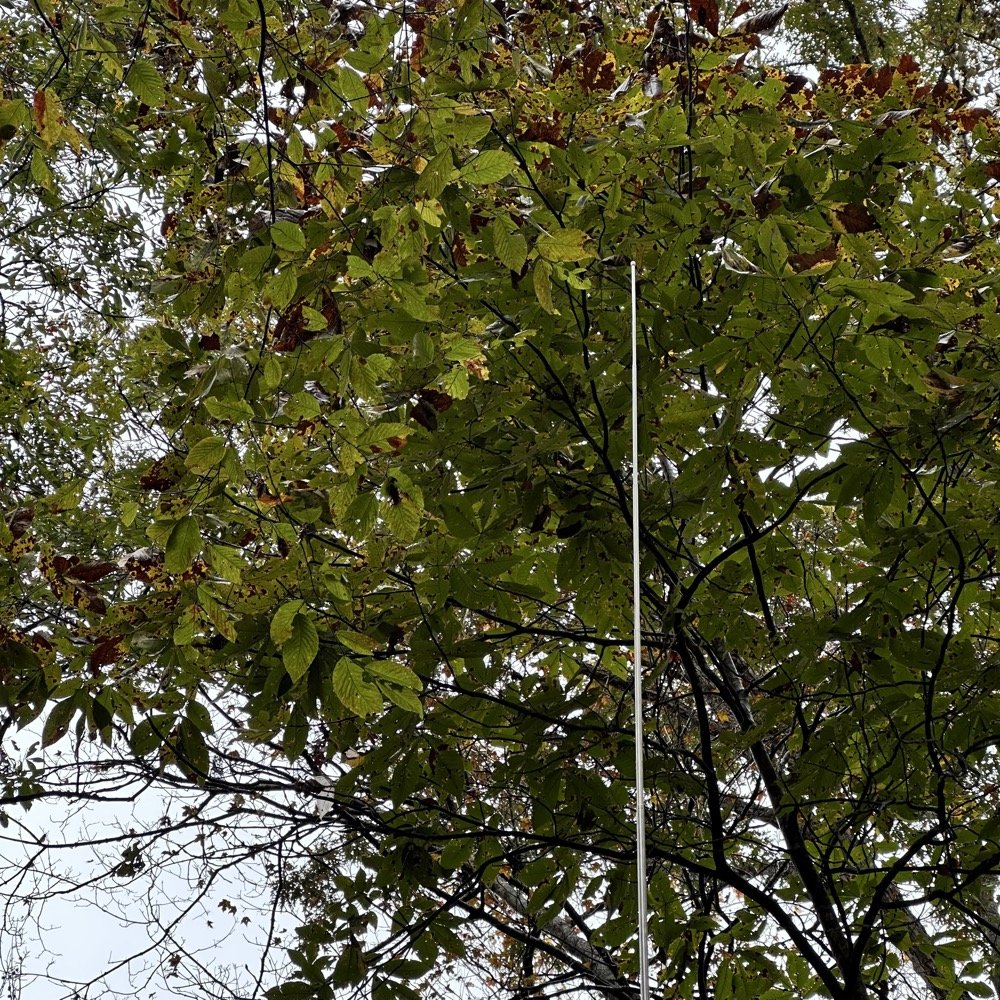
I leaned the antenna on purpose today. It just so happened that this was out of pure lazy too, LOL. I didn’t want to have to move the truck so I was able to lean the antenna and get it away from the leaves of the tree, as you see in the above photo. I don’t like for an uninsulated radiator to contact the trees at all, so I will move if need be to prevent this from happening. I have not tested this, it just makes sense to me for it to not be in contact. After tuning, I ran the coax into the truck cab and setup the radio as you see below.
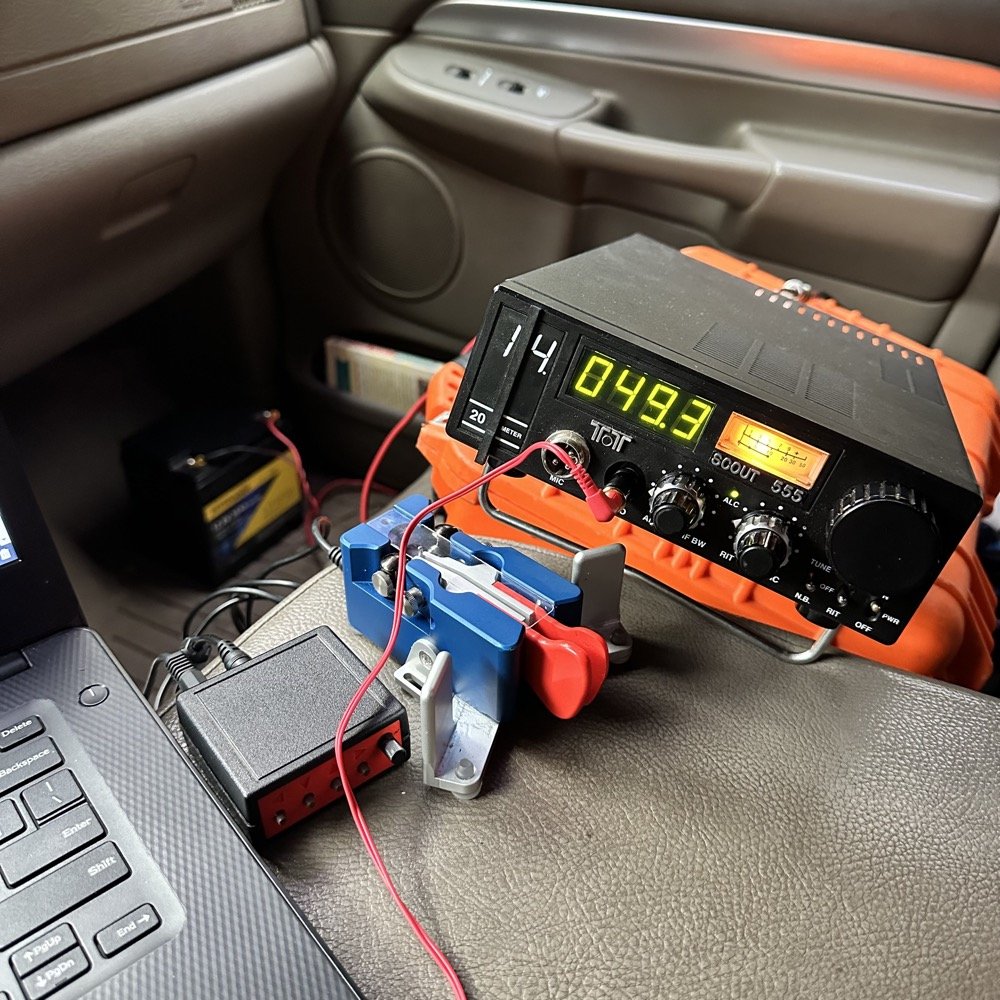
Yep, it is the Scout 555. Yep, it is at an odd angle due to how it is sitting on the orange case in the seat. Do I prefer this setup? Yep. It clears the knobs out of the way of the key and I can still reach the VFO knob easily. This worked way better than you would think to be honest. As you can see, I started out on 20 meters because as someone once put it, “That is where all the hams are…” and started dialing around the band looking for a clear space. I finally found 14.050mhz to be free from traffic and setup there after hunting a station or two first. I am glad I brought the computer today too as the stations started coming and just kept on coming in for a long time! 53 QSOs total in the log before I caved and switched over to FT8 for a while!
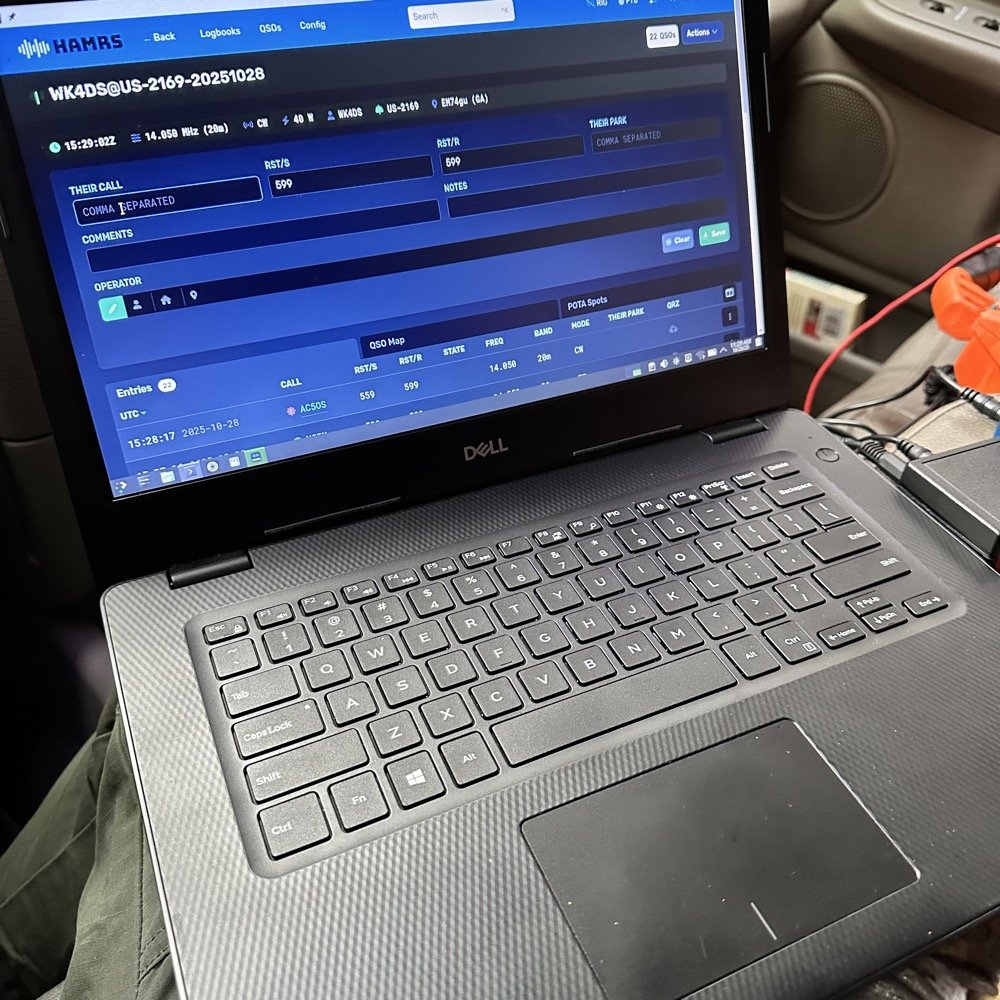
This little Dell Inspiron with Linux on it works way better than it should. I actually like it better than my usual computer for many things at this point. It is perfect for logging POTA contacts. I replaced both batteries in it after purchase and it has been a wonderful machine ever since. Did I mention that I got this computer for a great price on eBay? There are vendors on there that will sell these machines on the cheap and this is a good example. I pulled the Windows hard drive and replaced it with a new one (NVMe if I remember right) It is the kind that looks like a simple circuit board for a hard drive and installed Linux Open Mandriva on it. Then I added a couple of other programs and run HAMRS as an AppImage and it works flawlessly. So if you want to use a computer to log in the field, this might be a solution for you. Battery life has been great like this too. I have yet to run the battery down while activating and honestly don’t know how long it would run. Maybe that is something that I need to sort out as one point. I also have considered making a 12VDC power adapter for it too. Amazon boost converter anyone? Anyway, as of right now, I charge it at home and then use it during the activation and then charge it at home when I get back. This has worked for months now with no issues, but I have also not activated more than 5 or 6 hours max either so there is that.
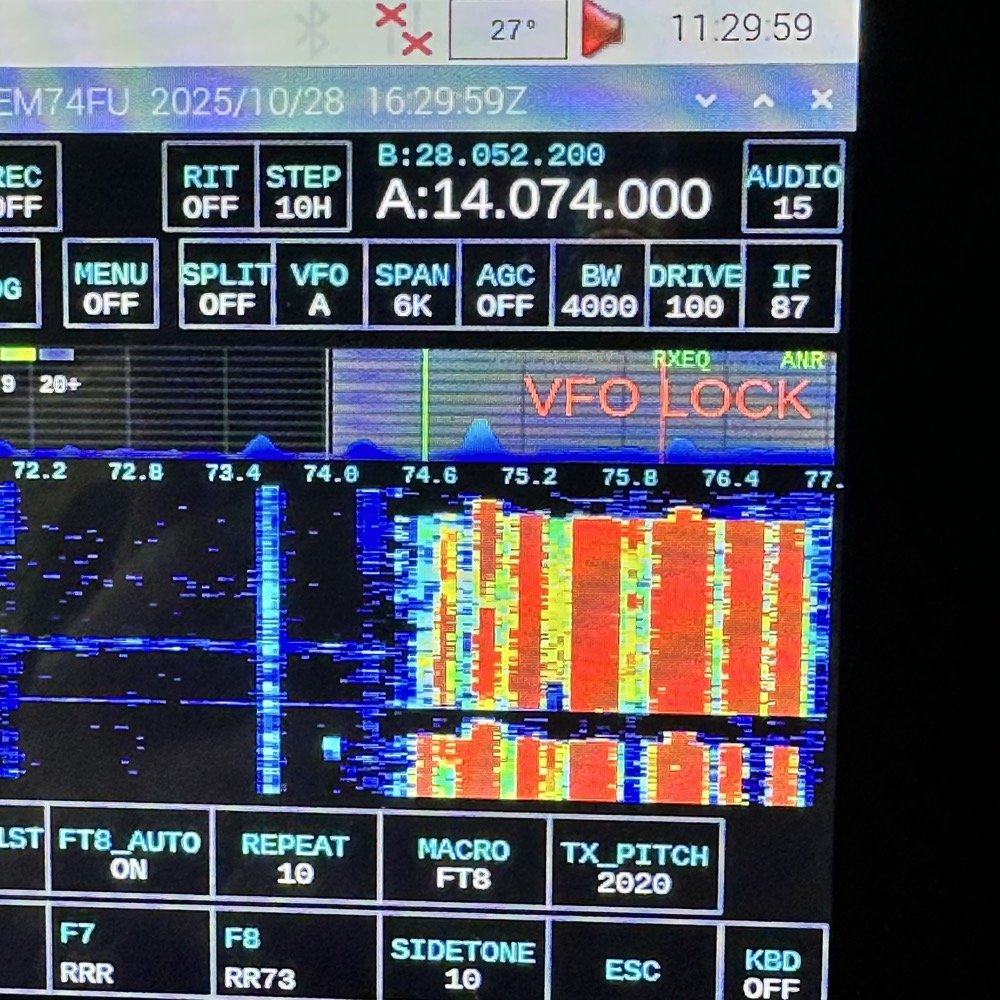
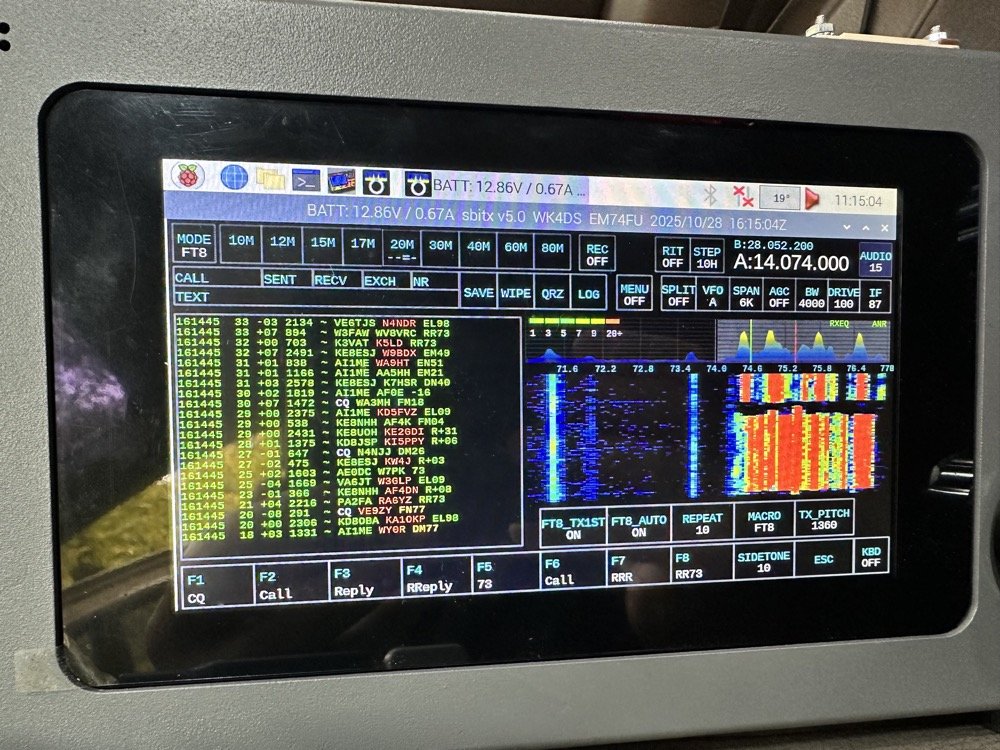
After making over 50 contacts and my arm getting tired. I decided to put up the Ten Tec Scout 555 and plug in the HF Signals sBitx running the Version 5 software. This version has all the stuff I wanted when I bought it back a couple of years ago. It now has robust finals, good working CW for a moderate speed operator such as myself and FT8 works…mostly natively in the radio as you see here. The only problems with the FT8 now are some processing issues here and there with completing QSOs that are not a big enough deal breaker to bother the devs with them and the fact that it will ignore replies to my calling CQ from time to time. This means you need to pay attention to the display while you operate so you can see the replies when they happen and you can choose them manually. Sometimes it will auto operate and it works beautifully, but sometimes it will not see them for some reason so you need to stay on top of it if you want to run the native program. It works well enough for me… There is an update or two that has come out since this, but this one works so well that I am afraid to attempt the update for fear of killing something I like…haha.
Something I have started using while running FT8 here lately is a new feature that was added in one of the latest revisions. That being the VFO Lock function. The VFO encoder spins pretty freely and I have even added some felt to make a sort of brake to dampen it, but you can bump the VFO pretty easily in the field and spin it off while operating. This stops that problem cold. I love having it for FT8 and you can still adjust the transmit pitch with the VFO locked and you don’t have problems. This little radio is still one of my most favorite POTA machines to this day. I will almost always have it in the truck even if I plan to use something else. This little radio worked well today netting me 22 FT8 QSOs for a total of 75 QSOs in the log! That is a lot for me in a single activation and helps me with my new goal of 10,000 QSOs at this park!
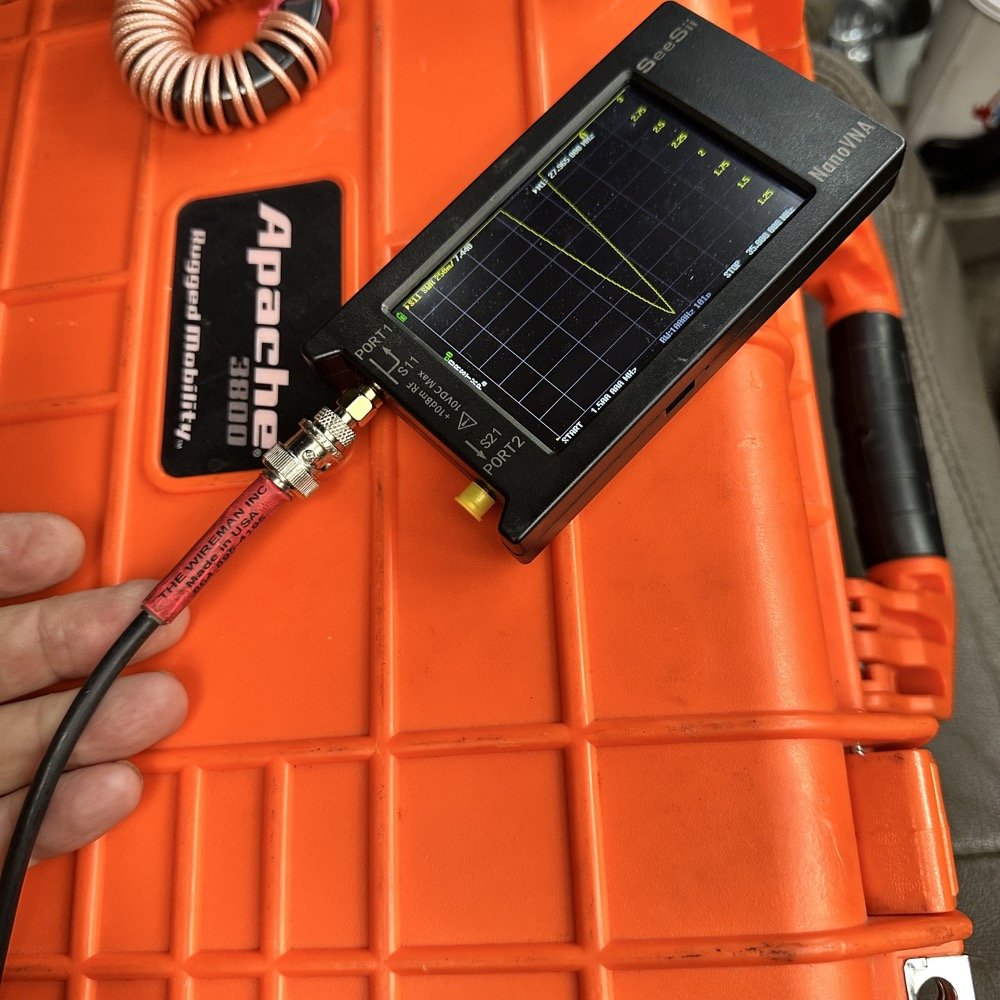
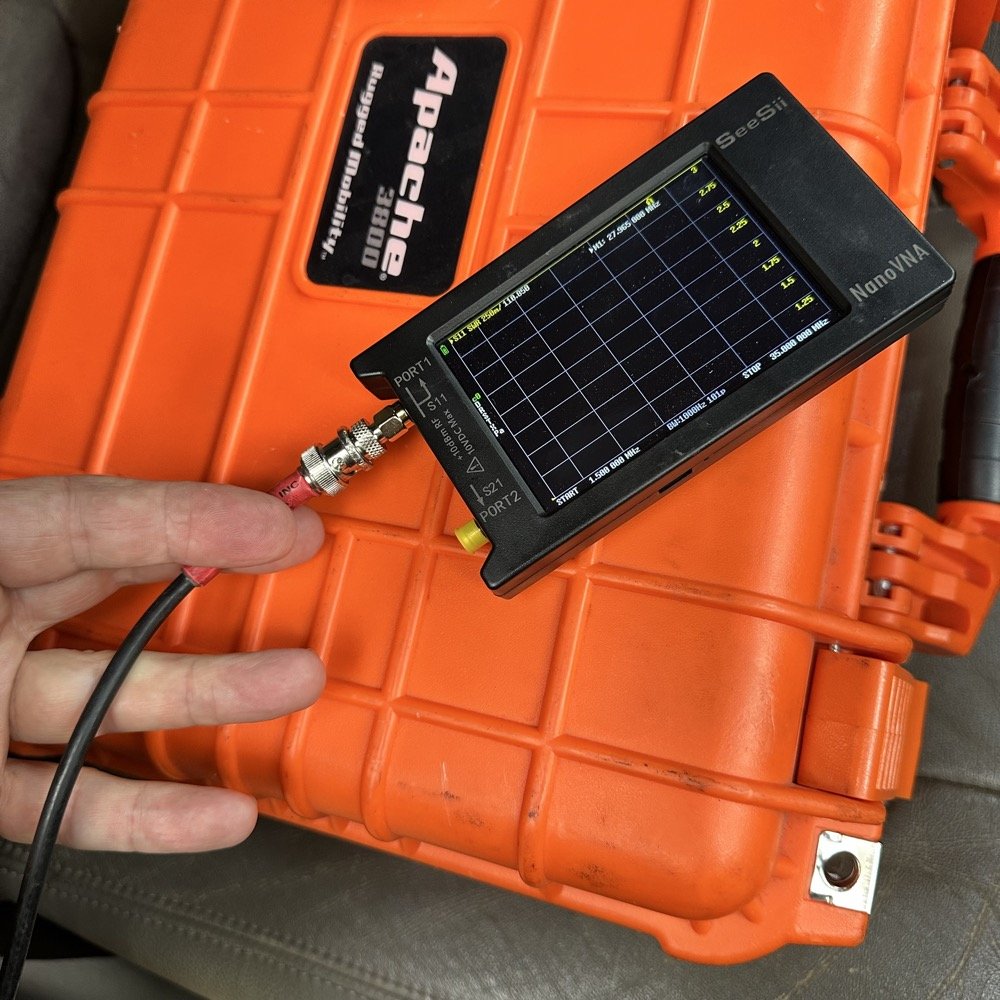
The next two photos show something else that you need to pay attention to while in the field. The top photo shows the tune for 17 meters for the antenna at the transceiver end of the coax and I set the VNA to cover from 1.5 to 35mhz for this demonstration. The bottom photo shows what the meter reads if I moved the coax slightly at a minor angle compared to the top photo. Notice the null is gone? This is because the center conductor is most likely broken on this end of the coax. I will replace this connector before deploying this coax in the field again. I have some connectors and my friend’s crimping tool (KG4WBI has all the cool toys) to install them with so it will be a simple fix. But this is an important lesson, if you get erratic readings on something as stable as coax, you probably need to look deeper… Now understand, this is not a defective cable from The Wireman. While they do sell this particular cable, I broke the cable using it, this is not their problem at all. That is why I will replace the connector and not bother them about it. Coax is a “consumable” and should routinely be replaced if you deploy to the field regularly like me. Just something to keep in mind if you are doing a lot of POTA ops…

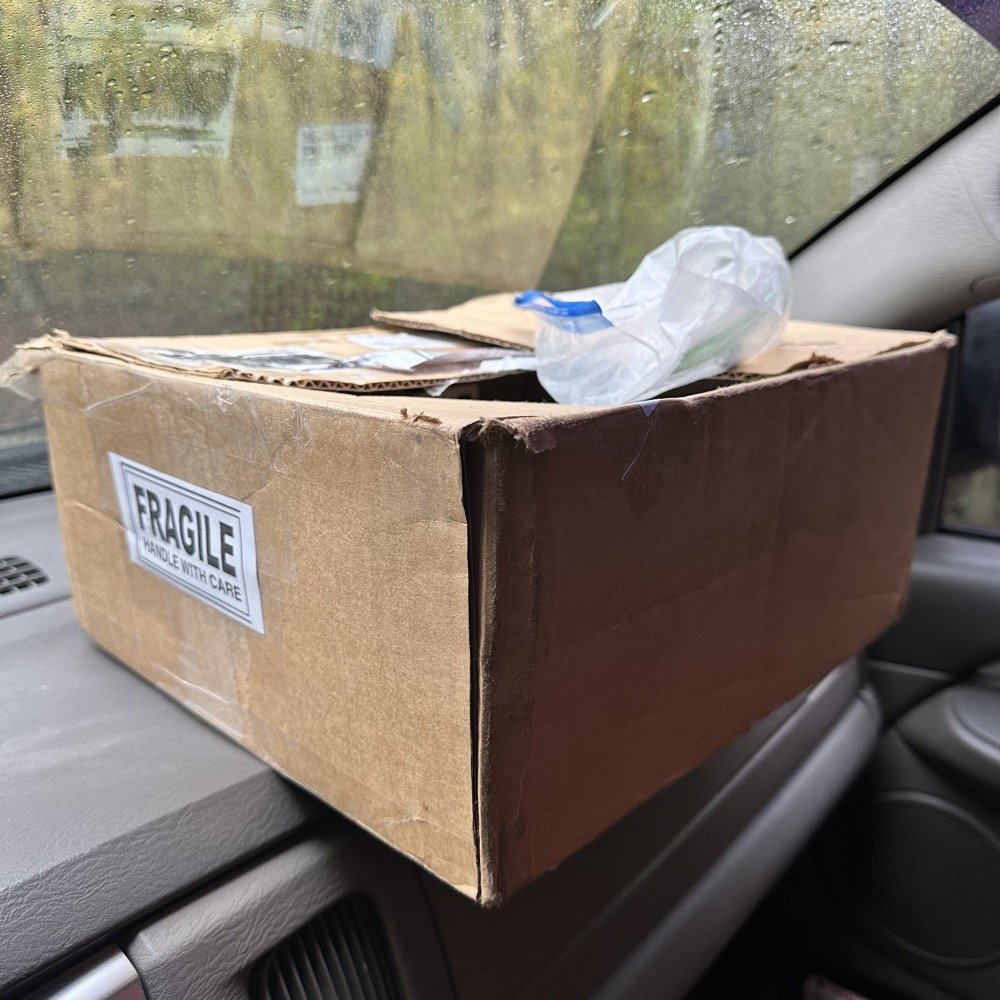
I have one last thing to talk about today. Below is the travel case I have been using for my Ten Tec Scout 555 and the associated band modules, owners manual and power cable… I really need to get a hard shell case for it and was wondering if anyone had any ideas on a cool case idea for this radio? I need to get something more permanent than this (It is the actual shipping carton I received it in). The hard shell case from Harbor Freight worked well for the last one, it was just kinda large… I don’t mind it that much, but I am open to other ideas too. So if you know of a cool hard shell storage case of some sort that can be repurposed with new foam to house the Scout, let me know!